  |
The Japan Times WORLD EYE REPORTS BELGIUM AT THE CROSSROADS OF EUROPE |
 |
| |
|
|
| ©THE
JAPAN TIMES |
Friday,
January 29, 1999 |
B1 |
|
The unifying factor Jan. 1 marked the day 11 members of the European Union
took the single most defining step in the history of Europe's integration
by formally giving up their own currencies and replacing them with the
single currency known as the euro. Even before the euro's launch, its
forecasted strength has had a stabilizing effect on its members' economies. |
|
|
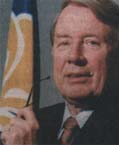
The Kingdom of Belgium, officially created in 1830, is a constitutional monarchy headed by King Albert II, who ascended the throne in 1993. Belgium's governing structure, however,has changed dramatically since the country's creation. It has gone through massive constitutional reforms that have resulted in a very loosely bound federal state. Today Belgium has one federal government and local governments in the its three regions: the Brussels-Capital Region, Wallonia and Flanders. The region maintain a decentralized and autonomous administration with extensive powers over economic policy, foreign trade, agriculture, energy, public works, employment, scientific research and land-use planning. The Brussels-Capital Region The main business goal of the Brussels-Capital Region government is to be the European headquarters for international companies. Brussels is Europe's decision-making center, home of the EU, NATO and over 1,000 other international organizations. As Joe Chabert, vice president of the Brussels-Capital Region, puts it, "We are the Kitchen of Europe. This is where the meals are prepared. Businesses like to be here so they can see what ingredients are going in and how things are prepared, and more importantly, so they can try to persuade the cooks to make the food to their liking. |
|
|
"We try to give seed money to companies that have a future. We invested in Mobistar, a mobile phone company. Now they have 700 to 800 people working here. We invested Bfr 650 million five years ago. Now the company is on the stock exchange and worth five times what we invested. We will now take what we have earned and reinvest it in other promising new businesses." Chabert divulged what he calls his Dynamo Plan to stimulate the regional economy, both by attracting foreign investors and improving the business environment for local companies: The aim of the Dynamo Plan is to create dynamism within the economy. One of the main problems with Brussels is the amount of bureaucracy. To simplify matters and be more efficient, we created a one-stop shop office called the Brussels Regional Development Agency, where investors can take care of all their business needs without having to deal with separate offices." |
|
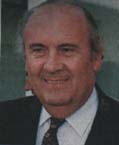
Wallonia Wallonia, Belgium's southern region comprises slightly over half the country's geographic area and is home to 3.3 million of its 10 million people. "Wallonia was Belgium's center of industrial development in the 19th century," explained Robert Collignon, minister president of Wallonia. "The region is now in the painstaking process of transforming its economy based on heavy industry into a more modern economy. It's an expensive process, both in terms of the actual conversion and in the environmental cleanup. Some of the old industrial companies are being rationalized and reconstructed, while others are being eliminated completely." |
|
The region has taken some significant steps toward modernization, specifically in the high-tech sector. In fact, Wallonia has become as important center for the European biotech industry and generates 71 percent of the country's biotech revenues. In addition to biotech, the aerospace and aeronautics industries are quickly developing in the Walloon region. And the region is no newcomer to this field. The Sabca company has been involved in aerospace research since 1920s. Sonaca, another company engaged in aeronautics, arrived just 10 years after that.
|
|
|
"This sector already accounts for 2,800 jobs in the region. The federal government invests some $185 million per year in the aerospace and aeronautics industries, while the regional government has invested $12 million in R&D and $15 million in other aspects of the industry in the last five years. Wallonia is responsible for 6 percent of all European space research, with just 3 percent of the EU population," Collignon said. The Walloon government is currently focusing on promoting cooperation between the public and private sectors. It recently announced plans to target its public activities budget toward a joint venture it has formed with the private sector. This venture will promote the development of four specific sectors of the economy considered essential to the region's development: the environment, telecommunications, new technologies and housing development. Within the environment sector, projects will be developed dealing with water, waste and recycling. Suez Lyonnaise Des Eaux and Vulcan Environment, two companies already established in this sector, will be involved in the project. Within the environment sector, projects will be developed dealing with water, waste and recycling. Suez Lyonnaise Des Eaux and Vulcan Environment, two companies already established in this sector, will be involved in the project. In telecommunications, the proposed activities include the development of an alternative fixed operator , the development of mobile telephony, the convergence of fixed and mobile phone systems with the Internet, the development of service productions and satellite communications. Wallonie Telecommunications will cooperate with such companies as Mobistar, Skybridge, ACM and Telinfo in these efforts. The new technology sector's will encourage and finance university or corporate research and activities that introduce new important technologies to the region. And in housing development, the objective is to stimulate the construction of housing units and large-scale housing facilities, especially in certain regions of Wallonia where current facilities are deemed insufficient. Wallonia proudly points to its quality of life, which is second to none, along with its excellent communications network and sound infrastructure. The region also offers tax and financial assistance to investors in the region as well as employee assistance programs. And a very open market mentally is prevalent in Wallonia, something of great importance in today's global village. |
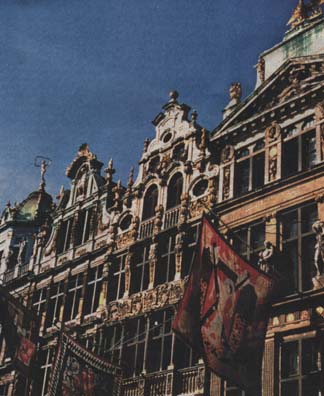 Gilded houses of the Grande Palace, Brussels |
Flanders - third in high-tech in Europe Around 80 percent of the world's polished diamonds pass through Antwerp in the northern Dutch-speaking region of Flanders. On the other hand, the only city in the world with bigger petrochemical industry than Antwerp is Houston, Texas. These facts alone may be enough to cause surprise, but there is more. The high-tech industry in Flanders is the third-densest in Europe, after German states of Baden-Wurttenberg and Hesse. And 75 percent of the new jobs created in Flanders are in the high-tech sector. |
|
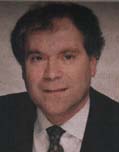
Eric Van Rompuy, minister for economic affairs for the Flanders Region, said, "Since the 1980s Flanders has been focusing on developing its high-tech sector. There is an area with high labor costs, but our labor pool is highly skilled and very productive. Therefore, we have a tradition of attracting very capital-intensive investments. "Textiles and food are also traditional sectors. There are still 50,000 people working in the textile industry here, but two-thirds of the costs in this industry are labor costs, so this industry isn't likely to last Flanders. Our future is in high-tech." Flanders has four high-tech "valleys" focused on speech technology, biotech, graphics and multimedia. These projects aim to bring entrepreneurs at the cutting edge of their technologies |
|
Llernhaut & Hauspie Speech Products is a Belgian company founded 11 years ago. It specializes in core technologies such as automatic speech recognition, text-to-text speech and text-to-text digital speech compression. The founders of this firm, together with other related companies, formed the Flanders Language Valley for the development and commercialization of speech and language technology products. The Flanders Language Valley is supported by a venture capital fund, the first in the world to focus exclusively on applications in speech and language technology. The advantage for investors in this organization, and the others like it, is the expertise and contacts of technicians involved. The Flanders Language Valley is expecting its rapid growth to continue in the coming years, and the other "valleys" expect no less. It's certain that these types of projects typify the future of the Flanders economy. |
|
|
One of the challenges facing Flanders as it approaches the new millennium is a stagnating workforce. Van Rompuy explained, "It is too easy for people coming out of universities to get jobs with the big multinationals instead of creating their own innovative enterprise. New venture capital projects are booming in the United Stares, Britain and some extent the Netherlands, but not as much here yet. We are trying to promote this type of activity in a number of ways, one of which is by offering financial incentives to this involved in venture capital projects. "In a country with virtually no remaining natural resources, our greatest resource is the human brain." Van Rompuy continued. "Other regions of Europe are becoming more competitive in what they are offering investors, so Flanders can't remain competitive in the long-run without maintaining a very well educated, productive workforce with the skills necessary to work with the latest technology. In 1996 Flanders spent 43 percent of its budget on education. Only the Scandinavian countries spend more." |
| TOP |
| Social cohesiveness |
|
|
Q: What image does Belgium project, and what are its main advantages as a business location? The image of Belgium as a business location is one of a small open economy right at the very heart of Europe with a highly skilled and productive workforce, the openness of its economy and its business-friendly climate, as well as its location in an affluent and densely populated region. Belgium is also the seat of such major international organizations as the European Union and NATO. |
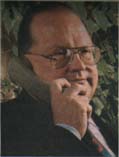
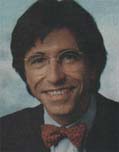
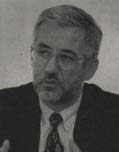 Luc Daems, General Director, Brussels Regional Development
Agency
Luc Daems, General Director, Brussels Regional Development
Agency