

|
|
|
| . |
|
|
Facing a future with Anders Fogh Rasmussen as its new prime minister, Denmark offers itself as an entrepreneurial export-powered nation and a hub for international business. And as the European Union (EU) evolves, companies increasingly view Europe in terms of regionalized markets with Denmark grouped together with Germany, Sweden, and Norway in the so-called Northern or Baltic Sea Region - arguably one of the fastest developing economies within the 15-member bloc.
Today, Denmark and Sweden are physically linked by the Oresund Bridge. Measuring 7.8 km long, the bridge cost the Swedish and Danish governments $1.75 billion, a significant investment for the two countries. Denmark's economic performance also prompts optimism. Although a member of the EU since 1973, Denmark rejected the adoption of the euro in a referendum in 2000, believing in the strength of the krone and the prospects of the economy without the single currency. With a stable currency and a low inflation rate, Denmark presents itself as an attractive business location. A GDP of $163 billion and a growth forecast of 2 percent for 2002 provide the country a healthy prognosis, especially when compared to larger EU neighbors. Furthermore, the business landscape is not dominated by behemoth companies like AP Moller and Lego but by small and medium-sized enterprises (SME's). Making up the backbone of the Danish economy, these companies give investors a field that is manageable and open. In fact, 95 percent of Danish manufacturers employ fewer than 100 people. With this framework, Denmark relies not on few giant companies, such as Nokia in Finland and Volvo in Sweden, but on SMEs, making the economy less vulnerable to the unpredictable trends in the global economy.
Denmark is the world's largest exporter of pork and cultivates a huge variety of crops. Accounting for 66 percent of Denmark's exports and imports, EU countries constitute the most important market. Less obvious markets are also garnering increased interest. The Eastern European market is growing, while exports to Southeast Asia are climbing. Within Asia, specifically Japan, trade relations cultivated with Denmark may not appear obvious. But, the two nations bear many similarities, particularly with their long histories in shipping, which allow for very promising trading possibilities. There are also the close historical ties between the Danish royal family and the Japanese imperial family. Currently, Denmark's top export to Japan is meat and meat products. Meanwhile, the Danish Agricultural Council's efforts to establish a brand have made Danish food synonymous with top quality. Denmark's inclination towards open trade results in friendly ground for foreign direct investment. Generally, restricted sectors remain few and foreign investors receive treatment given to local firms. This business climate doubled inward flows from 1999 to 2000.
Offering itself as an international hub, with an English-speaking workforce composed of enterprising people supported by a business-oriented government, Denmark treads firmly on the international stage. And looking ahead of the country's six-month term in the EU presidency in July 2002, everybody can expect only great things from this small yet highly innovative nation.
|
 |

 Hans Skov Christensen, managing director of the Confederation of Danish Industries, is optimistic about the new government.
 Copenhagen's old Royal Stock Exchange, a symbol of a rich mercantile tradition, graces a country perfectly adapted to global competition in the 21st century.
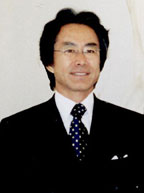 Shohei Naito, the Japanese ambassador to Denmark, looks forward to business-friendly policies.