|
|
|
 |
The Japan Times WORLD EYE REPORTS FINLAND |
 |
|
|
|
|
|
©THE JAPAN TIMES |
Sunday, October 10, 1999 |
B1 |
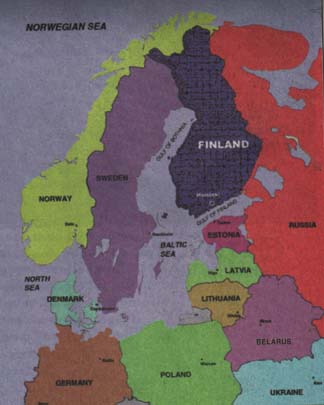
The recent attention may be sudden, but it is certainly well deserved. Finland's economy has outperformed much of Europe and shows all the signs to indicate sustainable growth. The successful restructuring of the country's traditional industries and a drive to increase exports have helped many of Finland's companies achieve leading positions in the global market. By far the biggest and most recent source of attention for Finland is its first term as president nation of the European Union, a six-month term which it assumed in July. However, even before Finland assumed the EU presidency, President Martti Ahtisaari was making headlines around the world for his skillful negotiation of the Kosovo peace agreement. Finland's deftness in foreign relations may likely be the result of a lifetime of occupation. Prior to this century, most of Finland's history belonged to its neighbors. Finland was ruled by Sweden for nearly 600 years until it was ceded to Russia in 1809. Finland existed as an autonomous duchy of Russia for over a century before declaring its independence in 1917. Following World War II, Finland maintained strong trade ties with its Soviet neighbor, but not at the expense of alienating Western democracies. This political balancing act was deridingly dubbed "finlandization" by Western critics who accused the nation of living on both sides of the Iron Curtain. Since joining the European Union in 1995, however, Finland has affirmed its identity as a European democracy. As Finnish Prime Minister Paavo Lipponen stated, EU membership has had a positive impact on both the country's economy and its global position. "Finland has found its place in post-war Europe," Lipponen explained. "We are now part of the dynamic market democracies of western Europe and we now have greater access to EU markets. In addition, the development of the Finnish economy has been further enhanced by our membership in the Economics and Monetary Union." Now, as current host of the EU presidency, the country has assumed the role with confidence and candor. A prime objective for Finland during its presidency is to promote the transparency of European Union activities. "This is a key issue in achieving people's trust in EU activities," said Lipponen. An unsuspecting industrial leader For a visitor arriving in Finland by plane, the country appears a picturesque landscape of lakes, forests and meadows. Yet despite the pristine environment, Finland is one of the world's most industrialized and technologically driven countries. Even in the country's capital and economic center of Helsinki, the cobblestone streets and pastel facade betray the economic importance of high-technology and heavy industry. Inside the city's quaint buildings are the headquarters of some of the world's top performing industrial enterprises.
Even Finland's best-known brand name products are somehow detached from the identity of their home country. For example, the whole world uses Wilson and Atomic sporting goods, but few know that they are produced by Finland's Amer Group. Even Nokia, the world's leading producer of mobile phones is often mistaken for a Japanese company. However, the behind-the-scenes attitude of Finnish companies does little to slow the nation's growth. Booming exports in the last few years have been primarily responsible for Finland's economic buoyancy. The GDP is anticipated to grow by 3.9 percent this year, with an increase of 4 percent predicted for 2000. While traditional sectors such as forestry and metals continue to grow, it is the electronics and electrical equipment sector that has truly boomed. The total production in this field has increased nine-fold since the beginning of the decade, currently accounting for about 26 percent of Finland's exports. Largely due to the electronics industry, the value of Finnish exports has doubled over the last seven years. The Finnish government actively supports the country's progression toward a society rich in knowledge and innovation. As Lipponen explained, Finns understand that in order to enhance competitiveness in the market place, investment in research and development is essential. By the end of this year, the Finnish government will have injected 3 percent of the annual GDP into research and development. While statistics indicate that Finland is already at the forefront of technological innovation, Lipponen believes that there is room for improvement. "Finland is a dynamic country but even more entrepreneurial sprint is required," explained Lipponen. "What I would like to see is a more creative society. There are not enough small to medium enterprises, which are what we really need. In addition, the services sector is underdeveloped compared with other western European countries." But what about the cost? In today's Europe, international investment for manufacturing is funneled mostly into the former Soviet republics. Labor costs in these nearby emerging economies are hard to beat. However, Finland has a number of other selling points that make it a highly competitive destination for foreign investment. For instance, Finland's rates for industrial electric energy are now among the lowest in Europe. International calls from Finland cost only about two-thirds of the OECD countries' average. Domestic long-distance calls are the third cheapest in Europe. A 1999 survey by the Lausanne-based International Institute for Management Development (IMD) ranks Finland as the third most competitive country in the world, a rise of two places since last year. The survey also pointed out that people of Finland are ranked number one in the world as a human resource. This reflects Finland's high educational standards and highly skilled work force. The widespread acceptance and utilization of information technology also stands in Finland's favor. Per capita, Finland now has the world's highest penetration of cell phones and the second highest number of Internet connections. Accordingly, the IMD ranks Finland number two in the world in terms of infrastructure. Finnish management was ranked as the world's third most effective, two places up from last year. According to Johannes Koroma, director general of the Confederation of Finnish Industry and Employers, investors fin Finland as excellent haven for foreign capital because they have extensive experience in foreign ownership. Described as an open society for both green-field and capital investors, Finland particularly welcomes investment in production activities. "We invite those with ideas on how to create effective production because we like to learn," stated Koroma. He added, "Knowledge-based investment in Finland is in good hands because we have very high educational standards and high skilled work force proficient in technical knowledge."
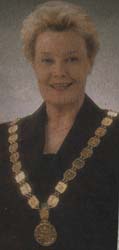
Finland's capital, Helsinki, is growing in popularity as a destination for both business and pleasure. Set in pristine natural surroundings, Helsinki has the pulse of a large presidency of the European Union, it is proving itself as a highly competent regional center for special events. Any visitor to Helsinki will notice all the construction-related activity taking place throughout the city. From new cobblestones to renovations of buildings to new construction, the capital is preparing for upcoming celebrations. The dawning of the new millennium will be a double celebration for this city of 500,000 people, Not only will Helsinki be commemorating its 450th anniversary, it will also be designated as one of nine European cultural capitals. "The attention Helsinki has and will continue to receive is very big challenge for our city. We are trying to give Helsinki a facelift in preparation for next year," said Eva-Ritta Silitonen, mayor of Helsinki "We have established a cultural foundation that will be responsible for implementing various cultural programs next year." Slitonen continued, "We have tried to create a variety of programs in order to accommodate everyone, including children. We have focused not only on opera, theater and music, but on activities that relate closely to the daily lives of Helsinki citizens." To commemorate the opening of Helsinki's City of Culture
Year, door of different cultural institutions will be open to the public
during the first weekend of the millennium. The morning after New Year's
Eve celebrations, Helsinki will open its door to both locals and tourists
and provide cultural events and activities for everyone. A large number
of museums, libraries, galleries, and churches will be open during the
day, offering a chance to view and experience Finnish culture. The neighboring
cities of Espoo and Vantaa will also participate in the event.
Bridging east and west As the only EU member to share a border with Russia, foreign investors are drawing upon the wealth of experience the Finns have with their Russian neighbors. According to Slitonen, many international companies have established offices in the Helsinki region with the sole purpose conducting business in Russia. "International companies choose Helsinki because it is an easily accessible place to do business ," said Slitonen. "We are also familiar with Russian affairs, which are changing all the time."
A patch of green and a touch of snow For outdoor activity enthusiasts and nature lovers a like, Finland is one big playground. Carpeted in lush green forests, this sparsely populated country is described as �the land of a thousand lakes�. This is a slight understatement as in fact there are 190,000 lakes that punctuate the Finnish landscape with crystal clear water. But these lakes are not the only features Finland has to offer. Whatever the season, this Nordic gem has an experience befitting the tastes of all visitors. Summer fun Just off the South West Finnish coast is one of the world�s most breathtaking archipelagos, a myriad of islands that emerge during the summer months and bask in the gentle warmth of the Nordic sun. Sailing through the Finnish archipelago on a yacht or ferry is an experience rich in tranquility and beauty. For those who prefer the wild side of summer, an excursion to the Lapland is the perfect solution. Hiking, biking, canoeing or fishing, the ways to explore the unspoiled wilderness are boundless. A favorite past time for most Finns during the summer months is a trip to private log cabin situated by a secluded, picturesque lake. No cabin would be complete without the traditional Finnish sauna and a rowing boat. A taste of the local lifestyle for the international visitor is readily available. �I feel most confident that Finland can offer a lot of unique experiences for tourists. Finland is not crowded and everywhere you go there is peace. When you travel north, to the lakeside, or archipelago you will experience something that is magical. Our nature is wild and unique. It is untouched. This is an aspect of Finland that is attracting the attention of international tourists,� said Keijo Suila, president of Finland�s national carrier, Finnair. Winter delights Every winter, thousands of visitors make the pilgrimage to Finnish Lapland to witness the Northern lights, streamers of colored light that appear in the Arctic sky. Folklore abounds with explanations of the origins of these celestial lights, but one thing is certain, the experience is spellbinding. The number of these auroral displays in Lapland can be as high as 200 per year. Many believe that witnessing the Northern lights phenomenon brings good luck and prosperity. Lapland is also home to Santa Claus, which disproves all theories that the Christmas legend resides at the North Pole. Santa�s workshop and village are situated on the Arctic Circle just outside of Rovaniemi, Lapland�s capital. Here both children and the young at heart can meet the Santa personally and visit his main post office, where thousands of letters arrive daily. In 1998, SantaPark was opened, which according to Santa Claus himself, �completed the Magic Christmas Circle�. SantaPark is an amusement park built into a mountain so as not to disturb the natural environs. Complete with Christmas shows, reindeer rides and an endless array of handicrafts, SantaPark is a Christmas experience for the whole family not to be missed.
Finland has been one of Europe�s best-kept secrets for too long. With the international attention it has received so far this year, the story of this wonderland is finally beginning to unravel. Having aroused the interest of both business professionals and tourists, Finland is preparing for the overdue influx of visitors. One way to keep up with the numbers is to gauge the occupancy rate of the country�s hotels. If the Radisson SAS hotel chain is any indicator, then Finland is set to become one popular destination. The Radisson SAS, in recognizing Finland�s newly found popularity, has invested heavily to meet the growing visitor capacity. The company now has five hotels located in major cities throughout Finland and has plans to open three more before the year 2002. In Helsinki, the group has three impressive hotels each with distinctive characteristics catered to specific customer segments. With an occupancy rate of 79 percent, the Radisson SAS hotels in Helsinki are a prominent force in the market. According to Mogens Stendrup, Radisson SAS regional director for Finland, the success of the hotels is due to the central reservation system and a strong management support team. �We see the three hotels as a theater, where there are three stages but only one technical crew backstage. The performance at each stage will be different, however they will all have a common approach to the customers which stems from one management team,� he said. At your leisure At the Radisson SAS Hesperia Hotel Helsinki, visitors can enjoy their stay in a natural setting that is just a ten-minute walk to the city center. Conveniently located on Helsinki�s main avenue, it overlooks Hesperia park and the tranquil Baltic sea inlet. The National Opera House and Finlandia Hall are adjacent to the park, their presence reminding visitors of Helsinki�s vibrant cultural and performing arts scene.
Business minded Visitors on a tighter schedule may find the Radisson SAS Royal Helsinki a quality choice for accommodation. Opened in 1991, the Royal is dedicated to serving the needs of the business traveler. Located in the heart of downtown Helsinki, the Royal is nestled in amongst the main shopping and business precincts, just a short walk from rail and tram connections. The Radisson SAS Royal has 262 rooms and depending on preference, guests can select rooms styled with a Scandinavian, Italian, oriental or Art Deco flavor. The Royal has two restaurants; Johan Ludvig, the acclaimed grill, and international cuisine at Str�get, located in the central atrium. In a class of its own The newest addition to the Radisson SAS hotel family is the Radisson SAS Plaza Hotel Helsinki, which was officially opened last August and is set to become the premium hotel in the chain. The Plaza is located not only in the center of Helsinki but in a setting rich in tradition. The foundation stone of Vilhonkatu 7, a building that has experienced many eras, was laid in 1917. Part of the building is protected by the Helsinki City Museum and the building�s historical values have been preserved in the reconstruction. The Plaza also incorporates a newly constructed section that was designed by the renowned Finnish architect Professor Ilmo Valjakka. Sweden�s Christian Lundwall designed the rooms, which are representative of three different styles, Italian, Classical and Nordic. The plaza�s 301 rooms cater to the needs of the business professional, where new technology has been seamlessly integrated into the historically rich premises.
Hotel Personality Conveniently located on the rim of the city center, the Helka hotel is comfortable and homey, an atmosphere larger hotels can tend to neglect. With its �� recently renovated rooms, guests will find needs fully catered for. The Helka hotel�s restaurant was refurbished earlier this year and offers a wide selection of culinary delights. The French brasserie-style bar on the first floor is a great place to unwind after a day�s meetings or sightseeing. For visitors to Helsinki seeking inexpensive yet quality accommodation, the Helka hotel and its friendly staff is a home away home.
HOME About Us Careers Contact Us Reports Advertisers About Japan Times © 1999 World Eye Reports |