|
|
Where
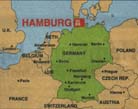
'world class' meets the world
There's nothing cheap about Hamburg. Taxes are
high; labor costs top national scales, and the local government
doesn't smile on offering incentives to foreign groups to settle
here. Yet more than 3,500 multinational companies have chosen
this city-state as home for their European headquarters. About
40 of the top-500 German companies are based here. There are more
millionaires in Hamburg than any other city in the country. The
number of foreign consulates is second only to New York.
|
|
This is the case because Hamburg is all about class.
The standard of living is high because the city sets it that way. The
people are more interested in making money than saving it, and they
know that you make money by offering quality.
This is the greenest and most service-oriented international area in
Germany. It's got that big city savvy, but with a small-town feel. It
is one of the few places left on the planet where a handshake means
as much as a signature. It's been that way for over 1,000 years. And
as the new millennium dawns, Hamburg is more prepared than ever to shake
hands with the world.
"If you look at Hamburg, it is a powerhouse with respect
to growth, strength and wealth," said Dr. Dietmar Dudden, chairman of
the Hamburg Business Development Corp. "These elements exist because
of our diversity. Without that, Hamburg would not have survived as long
as it has."

Dr. Dietmar D�dden, chairman, Hamburg Business Development
Corp. |
On the waterfront
Globalization has always been a buzzword in Hamburg.
Since the establishment of the harbor around 1189, the city has
done all it could to foster the shipping industry. Shortly after
the port was built, the emperor ruling at the time granted a series
of privileges to Hamburg allowing for duty-free trade along the
122 km of the Elbe river from the city up to its mouth at the
North Sea. Over time, the city has continued to liberalize, earning
the nickname Gateway to the World.
Today, according to the Chamber of Commerce, there are about 1,800
general cargo companies with offices in Hamburg. Of these, about
250 specialize in long-haul cargo and 450 are forwarding companies
offering combined truck, rail, air and ship services. The port
sees cargo exceeding 70 million tons and more than 3 million TEUs
of container traffic per year.
|
|
"Hamburg is a very traditional metropolis in trading
and transport. It has an organizational infrastructure second
to none," said Dr. Hans Ludwig Beth, chairman of the Port of Hamburg.
"It has always maintained a healthy and international air about
it, which is why the city's official name is still the Free and
Hanseatic City of Hamburg."
The strategic positioning of this port city of
1.7 million inhabitants is not something to be relegated to the
annals of history. In 1990, with the fall of the Iron Curtain
- which stood just 50 km east of Hamburg - countries such as Poland
and the CIS states got their first taste of the Western World.
That taste was fed to them from Hamburg.
Continued development in the East, as well as the economic boom
in Scandinavia, are strengthening Hamburg's position as a global
player by literally shifting the city back into the center of
Europe.
|

Dr. Thomas Mirow, senator of economics-Hamburg
|
"Whatever happens in this area of Europe is to the
advantage of this port, which develops its network with block trains on
the land and feeders on the water," said Beth. "With the growth of the
port, Hamburg has more than its share of international transit. This is
an arguments in favor of further developing the hub function of the port."
And further development is exactly what is happening.
A stalled 1996 proposal to deepen the port access by dredging the Elbe
has now been accepted, approved and is under way, according to Beth.
The approach to the sea will be deepened by 15 meters in order to allow
all existing ships as well as the next generation of larger vessels
to access Hamburg's port facilities. Beth expects the project to be
completed by the end of this year. There are also plans to expand the
capacity of the port's terminals and improve logistics, distribution
and warehousing capability making the port even more competitive on
the global scene.
"We are responding to the competition. This is the future.
I would say that the typical northern ports of Antwerp, Rotterdam, Bremen
and Hamburg are all fighting for exactly the same cargo, with the exception
of crude oil," explained Beth. "Because we all have limited resources
and limited budgets, we have to concentrate on the big accounts. We
are working to attract the big shots."

Dr. Hans Ludwig Beth, chairman, Port of Hamburg
|
Shipshape business sectors
With a diverse range of goods constantly coming
into Hamburg. It was natural for a diverse range of services to
evolve around them. As more ships were needed to meet demand,
the shipbuilders came. Those ships needed to be financed and protected,
so the banks and insurance companies found their way to Hamburg.
And with the ocean serving as the "information super highway"
of the day, it seemed natural that the communications sector would
settle here as well.
"We have seen a lot of new developments among
the media companies," said Dudden. "We see some parallels with
the United States when you talk about California's Silicon Valley
and New York as Silicon Alley. If you transferred that to Germany,
we say that Munich is Silicon Valley and Hamburg is Silicon Alley.
|
Today, Hamburg stands as Germany's No. 1 city for media.
It is also No. 1 in insurance and the second-largest banking area next
to Frankfurt. Home to Daimier-Chrysler Aerospace and Lufthansa Technik
AG, it is the European center of the aviation industry. The 21st-century
sectors already taking root include microelectronics and software engineering
as well as medical, pharmacological and environmental technologies.
"We are rather good in the service sector. We have a
GNP made up of about 80 percent trade and services, which is unusually
high for Germany," said Dr. Thomas Mirow, the city-states minister of
economics. "The service sector is in good shape and very modernized."
But more than just the service sector is doing well.
A recent report by the Hamburgische Landesbank stated that while increasing
international trade and export activities are the main engines behind
Hamburg's growth, positive developments in the production and retail
sectors contributed as well. The GDP growth for 1998 was about 3 percent,
up from 2.5 percent in 1997.
International appeal
Often described as a small city with all the benefits
of large one, Hamburg offers comfortable living. It's one of the greenest
metropolitan locations in Germany, but it also has topnotch infrastructure,
excellent universities and enough art, music and theater to keep the
keenest of culture buffs satisfied. A number of top executives of multinational
companies have joked that one of the hardest things about sending staff
to Hamburg is that they never want to be sent anywhere else.
"There's something for everyone here," said Dudden.
"The well situated businessperson finds cultural delights in Hamburg,
and so does the kinky, creative person of the art studio. They both
find their areas to live and have a good time. This is something that
distinguishes Hamburg as a city of the same caliber as Munich, Berlin
or Cologne."

Hamburg's picturesque Rathaus overlooks the Alster.
|
This appeal certainly extends to Japanese firms,
as well. There are approximately 2,500 Japanese citizens living
here, and the amenities for Japanese residents include 10 Japanese
gardens and a Japanese school.
Hamburg boasts the European headquarters of 30
Japanese companies and the German headquarters of 45 others, including
Sharp, Matsushita, Konica, Minolta and Yamaha. And it's not just
sales offices and "sogo soshas." Since 1989, five companies have
established production plants in Hamburg. Panasonic recently invested
$17 billion on a new facility for its parts center for Europe.
|
"Japanese companies have had good reasons to make
the decision to invest here," said Dudden. "It is not a decision made
purely based on cost - that's for sure. The attractiveness of Hamburg
comes from more than just having space to store a product and the people
to move it back and forth. Here you have everything you need to run a
successful operation: logistical experts, accounting people, design people,
repair and maintenance people. All the functions aligned with success
are here."
Center
of Europe -- gateway to the world
The launch of the pan-European euro currency on the
first day of this year, along with the economic successes in Scandinavia
and the opening of markets in Eastern Europe, have opened up a lot of
new opportunities for Hamburg. In addition, the city-state's long-standing
relationship with Japan is alive and well - unwavering in the face of
the current financial challenges.
Hamburg's Mayor Ortwin Runde took some time to speak with World Eye
Reports about some of the changes, challenges and strengths of the jewel
of northern Germany
WER: The face of Europe has been changing rapidly
in recent years. How have these changes affected Hamburg?
Runde: There have been two main things regarding
this point. One was the enlargement of the EU to include the northern
countries. This brought us more into the middle of Europe. The other
thing has been the development of the eastern countries that are trying
to become part of the EU. They are gaining new importance. We have very
close relations with the eastern countries. Trade nowadays with the
middle European reformed states like Poland, the Czech Republic and
Hungary is bigger than the German trade with the United States.
Our geographic situation has changed a lot. Now you have a very important
region in Hamburg and a very metropolitan region in Berlin. The southern
part of Denmark is also a very fast-growing region. That is an important
triangle. It will develop very successfully, I'm sure. When the German
government moves to Berlin, this too will be a very significant change
for Hamburg.
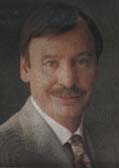
Ortwin Runde, mayor of the Free and Hanseatic City
of Hamburg
|
Currently Hamburg is the most productive region
in Europe. We had a new ranking of regions in the EU, and it said
that Hamburg is most productive, followed by Brussels and Frankfurt.
WER: Please characterize the state of Hamburg's
economy as of 1998.
Runde: Over the past years, we have had a serious economic
crisis in Germany, including Hamburg. The economy had negative
growth of about 1.9 percent for the whole economy. Hamburg recovered
a bit faster than other states in Germany because we are so strongly
connected to world trade. World trade is the motor of our economy
here. So we had a better situation regarding the growth of our
GDP. For 1998, the growth will have been about 2.5 to 2.7 percent.
One major problem for us is that although the GDP is growing,
employment is falling back because productivity has grown much
stronger than in past years.
|
WER: Could you describe the relationship
between Hamburg and Japan?
Runde: The relations between Hamburg and Japan
are very important. Japan has been represented with a consulate in Hamburg
since 1910. There are several institutions with Japanese know-how in
the city, like the Institut fuer Asienkunde and the East-Asia Association.
Hamburg has 121 Japanese company branch offices with more than 6,000
employees. A lot more of them can be found in the surrounding areas.
WER: This year marks the 10th anniversary of the
sister city partnership between Hamburg and Osaka. What is being done
to mark the occasion?
Runde: On the occasion of the 10th anniversary
of the sister city partnership of Hamburg and Osaka. I plan to visit
the city of Osaka from May 23 to May 26. This anniversary is going to
be celebrated by a cultural program called Hamburg Tage Osaka, which
will include concerts, exhibitions of work by Hamburg artists, lecturers,
discussions, conferences, a film festival and a photo exhibition entitled
A City of See.

HOME About
Us Careers Contact
Us Reports Advertisers
About Japan Times
© 1999 World
Eye Reports
|