

|
|
|
| . |
|
WER met with Hamburg's state senator for economics, Gunnar Udall, to discuss the importance of foreign trade to the city-state.
Last, Hamburg is known as a technically advanced and reliable port. All these reasons make it attractive for the container ships to come to Hamburg. Let me mention that the Port of Hamburg hosts the European distribution centers of many companies from Japan and other countries. WER: Hamburg has very strong ties with emerging economies of the world, including Eastern European states, China, and the Nordic and Baltic states. What specific advantage does this give Hamburg? Uldall: Ties to the emerging economies are a great advantage for Hamburg. For example, Hamburg is the city with the largest number of Chinese companies in Europe. Another advantage is in the works. Confidence in the development of the Baltic states is behind the mini-land bridge project between Hamburg and Lübeck. The project is a partnership between the container handling company Hamburger Hafen and Lagerhaus-AG with the logistics company Combisped. Combined with the new intermodal terminal in Lübeck, the mini-land bridge will complete connections between Hamburg and the Baltic Sea. WER: How is Hamburg strengthening the ties with the more developed economies of Asia, specifically Japan, as Asia's largest? Uldall: Economic relations between Hamburg and Japan go back to the 19th century and have grown closer ever since. One of the reasons Hamburg has the second largest concentration of Japanese companies is that the city is Germany's leading seaport. It has a comprehensive commodity structure in the handling, storage, and processing of goods, as well as services ranging from logistics and distribution to the provision of system concepts situated right at the heart of Europe With more than 120 companies in Hamburg, including: Citizen Watch, Olympus Optical, Yashica, Sharp Electronics, Ajinomoto, Asaji-Pentax, Konica, Casio Computer, Seikosha, Panasonic, Makino and Olympus. Japan is for Hamburg the most important country outside Europe. Those economic ties are very important to our city and we have followed with different measures of support. One of them is the funding of the German-Asia Pacific Business Association -- situated in Hamburg -- that organizes events in different trade sectors. Also, Japan is one of the target countries of the state-owned Hamburg Business Development Corporation, which promotes business cooperation and has an office in Japan. There are regular meetings with representatives of the Japanese community, especially those from the Japanese companies. During those meetings, Japanese companies bring up their problems directly to the government and we try our best to help whenever possible. Other factors that have an impact on business relations are the existence of a city partnership between Hamburg and Osaka; and cooperation between the ports of Hamburg and Yokohama. WER: Hamburg has always been a traditional location for European headquarters of multinational companies. What kind of programs and incentives does Hamburg offer to keep those multinational companies and attract more? Uldall: We have comprehensive networks readily available here in Hamburg. Lawyers, tax advisers, and marketing companies with substantial knowledge of Asian countries, including staff fluent in Japanese and Chinese, demonstrate the city's competence regarding Asia. We have also implemented special services to eliminate obstacles imposed on multinationals here. For example, there is a visa counter at the Information Center at the Chamber of Commerce where senior foreign executives can obtain their visas without going through time-consuming procedures. For small and medium-sized enterprises, our rent-subsidy program for the initial months of operation is definitely attractive.
|
 |

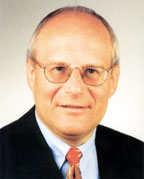 Hamburg State Senator Gunnar Uldall