India is the seventh largest and the second most populous country in the world. Today, it is a symbol of a struggle to ascend from poverty to prosperity and from tradition to modernity. India, recently emerged as a vibrant free-market democracy after the economic reforms in 1991, has begun to flex its muscles in the global information age.
A new spirit of economic freedom is now stirring India, bringing sweeping changes in its wake. The old centralized bureaucratic state has begun a subtle but definite decline, while introducing a series of economic reforms aimed at deregulating the country and stimulating foreign investment have moved into the spotlight.
While most people easily grasp the spirituality and poverty of India, the significance of this social and economic revolution often eludes them. As India moves firmly into the front ranks of the rapidly growing Asia Pacific region, its success on a global scale is becoming more evident.
"The future markets for India are considered extremely promising," says Dr. Manoj Vaish, deputy executive director of the Mumbai Stock Exchange (BSE). "The cost of labor in India is only one tenth of total costs. In addition, the cost and availability of capital goods and raw materials in India are attractive. Japanese firms are looking to India as a supply base for Japan and third countries."
|
|
 Manoj Vaish, deputy executive director of the Mumbai Stock Exchange Manoj Vaish, deputy executive director of the Mumbai Stock Exchange |
The transition to developed nation status has not been easy. Reforms have sometimes been difficult to start, slow-moving, and in some cases, incomplete. Though the process of profound change in Indian society has already begun, many still believe the reforms need to be quicker.
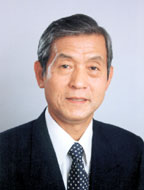 Hiroshi Hirabayashi, Japan's ambassador to India Hiroshi Hirabayashi, Japan's ambassador to India
|
|
"The image of India that Japanese companies have may surprise Indians," Hiroshi Hirabayashi, Japan's ambassador to India. "The Japanese still believe the infrastructure in India has not improved as much as it should have done by now. Politically, Japanese firms do not know what the latest situation is. They feel regulations in India are very unclear and vague, and this makes it hard for them to commit in some ways."
Clearer guidelines are definitely needed to encourage more foreign direct investment. "People want to see more transparency and accountability," Vaish adds. "They want a safe environment that guarantees the security of their long-term investments. These include a free and vibrant press, a judiciary which can and does overrule the government, a sophisticated legal and accounting system, and a user friendly infrastructure."
|
India's dynamic and highly competitive private sector has long been the backbone of its economic activity. It accounts for over 75 percent of its GDP and offers considerable scope for joint ventures and collaborations. This is where Japanese companies have achieved great success. Aside from software development, they are very active in the motor segment.
For example Hero, a joint venture with the Munjal family, is a leading player in the motorbikes segment. Many of the other auto manufacturers have technical collaborations with the Japanese, as do construction, pharmaceutical and chemicals companies.
Today, India is one of the most exciting emerging markets in the world. Skilled managerial and technical manpower has already made it globally competitive.
Already recognized around the world as a "knowledge economy," India boasts 325 software companies in the technological center that is Bangalore alone. Most of them have customers in America, who e-mail their needs before they leave their offices.
|
|
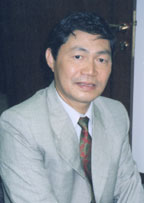 Yutaka Miyahara, director general of the Japan External Trade Organization Yutaka Miyahara, director general of the Japan External Trade Organization |
As they sleep, Indian engineers work on their problems and supply solutions before the next morning. The spirit of the age is reflected in hundreds of similar entrepreneurial success stories.
 Past and present blend into the heady mixture of economic potential that is modern India Past and present blend into the heady mixture of economic potential that is modern India |
|
India as an economy continues to look abroad, creating a new atmosphere of reforms. Entrepreneurs have developed businesses armed only with their personal talent, hard work, and professional skills. Their consistent push for liberal economic reforms combined with investment in human capabilities will hopefully ensure that millions of Indians lift themselves from poverty within a generation.
|
|

|



