

|
|
|
| . |
|
|
Shortly after the end of the Second World War, Mitsui & Co commenced local operations. Since then it has taken part in projects central to Indonesia's economy, such as Wisma Nusantara, the creation of a large number of chemical plants, and the Paiton I power plant.
Furthermore, the company is putting effort into efficient distribution services with an advanced scheme of supply chain management (SCM) among Indonesian national enterprises and foreign enterprises operating in Indonesia. The company has 50 joint ventures and is carrying out business development in a range of fields. These entities as a whole are addressing the changing industrial climate in Indonesia, wherein several foreign enterprises are moving from "transplant" knockdown processes to local manufacturing facilities. Mitsui recognizes the growing domestic demand in Indonesia as well as promising demand in the member countries of the ASEAN Free Trade Area (AFTA), which will come into effect in 2003. Based on this, the company is putting its efforts into fostering high-quality, performing businesses and the establishment of material supply bases for developing industries that aim to increase local procurement ratios. "As Indonesian domestic demand is starting to expand, we should focus on business incentives in order to establish production and sales systems that target both domestic demand and demand in the AFTA countries," Yokote asserts. He also stresses that Mitsui offers the maximum level of support possible to contribute to the development of Indonesia's economy. "When considering investment in Indonesia, competitive advantage over China often comes to the fore, but we feel that being competitive with other countries in the AFTA is the most important issue," he continues. "Given both Indonesia's human resources and its prolific energy and mineral resources, one naturally believes Indonesia will play a central role in AFTA." "However, in order for this to occur, we strongly hope that Indonesia's security, legal, tax system consolidation, and labor issues are resolved and that the country quickly becomes an environment into which foreign -- including Japanese -- companies, can make investments with a high level of confidence," he adds.
|
 |

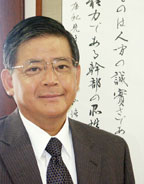 Yasunori Yokote, president of Mitsui & Co. in Indonesia