|
A
global greenhouse of technology
Ask any Israeli what their country’s greatest
resource is and you almost always get the same answer: ideas.
Then ask them why.
“We don’t have anything else. We don’t have any natural resources,”
said Rina Pridor, program director of Israel’s Technological Incubations,
a government-sponsored program designed to turn high-tech innovations
into profitable startup companies. “We have good human capital.
That’s our resource, and we have to exploit it. It’s a struggle
for life.”
|
|

Rina Pridor, program director of Israel's Technological
Incubators |
Struggling for life is
certainly not a new concept for the Jewish people or the State of
Israel. A look back on the nation’s short 50-year history reveals
numerous hardships and more bloodshed than anyone cares to remember.It
has been the very elements of struggle and persecution that have
placed Israel in the advantageous global-player position it finds
itself in today. The lack of natural resources, the open-door immigration
policy and the early need for a strong defense industry kept the
mindset of the populace firmly focused on continuous innovation.
It was, simply, adapt or die.
|
Despite the current stall in efforts to forge peace between
Israel and its Arab neighbors, most people are committed to the process
and are confident hostilities will decrease. This feeling of inevitable
peace has opened opportunities for defense-oriented industries - including
aerospace, medical technology and telecommunications - to branch out into
the civil market. And because Israel itself is such a small nation, the
new markets it’s eyeing are all international.
"The main issue today is not to speak Hebrew, Arabic, English or
Japanese, it’s to talk the business language,” said Amir Hayek, director
general of the Israel Export Institute. “The business language has its
own code. That code is to find a win-win situation. If we are working
toward a win-win situation, we are on the right track. That is the result
we are working for.”
Starting up startups
Israel currently has more startup companies than any country except
the United States. According to Hayek, there are about 1,541 companies.
Entrepreneurial initiative continues to shape Israel today. But
raw talent and ideas need time and guidance to grow. Inventing an idea
and marketing it around the world at a profit sit at opposite ends of
the business playing field. And the race from one port to the other
is laden with obstacles. In short, there is a strong need for startup
companies.
Well aware of this, the
Israeli government created Technological Incubators program in 1991.
It is based on partnerships between the national government, the
people possessing the new ideas and the institutions capable of
supplying the necessary assistance for growth and development. These
institutions include universities, local municipalities and veteran
industries looking for ways to be involved. Through the Office of
the Chief Scientist, a set of rules and guidelines were established
for the institutions and potential partners were approached.
“We approached them with a set of rules. If you comply with the
rules we will support you. This is how it started,” said Pridor.
“Potential incubators must have facilities where 15 to 20 research
projects can take place. They must have a board of directors made
up of people from the industrial, commercial and research sectors.
All of them are volunteers so far.” |
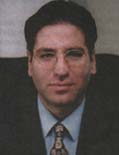
Amir Hayek, director general of the Israel Export
Institute |
This approach worked, and today there are 26 so-called
incubators operating in Israel. At any given time there are as many as
200 projects in stages of development, each with a period of two to three
years to succeed. Each incubator maintains between eight to 10 projects
continuously. Each accepts three to five new projects per year, and each
releases three to five projects per year - either aborted of for potential
success.
Projects must fit a strict criterion for acceptance. Basically, the proposed
idea must ultimately lead to a commercially viable product based on research
and development. It must show innovation compared to what already exists
on the international market, and the idea must be the initiative of an
individual as opposed to an existing company that has access to other
means of financial support.
Financial support is offered in two stages. Each incubator is reviewed
annually and, upon approval, granted $180,000. Also, each individual funds
up to $300,000 over a two-year period. The program receives 10 times the
number of applications per year than it can accept.
By the end of 1998, the program had completed 470 projects since its inception.
About 51 percent of those still exist as viable companies. Together, the
successful projects have attracted more than $200 million in private investment
since leaving the incubator program.
“This is quite an achievement as these same investors wouldn’t even talk
to these people just two years earlier when they were just starting out,”
said Pridor. “So, as you see, a person can come without a penny and still
have a real chance to get established. It’s working quite nicely. Not
easily, but nicely. The results are good.”
Ready to work with the world
Naturally, Israel is about more than simply establishing new startups.
For the already established companies, as well as the up-and-coming, tackling
the world markets is as essential as the continuous generation of new
ideas. With a total population of about six million, many companies cannot
succeed by operating merely within national borders.

Israeli minds may be focused on a high-tech future,
but their souls still seek wisdom in the heart of Jerusalem's Old
City. |
To
assist those companies, and the nation as a whole, the Israel Export
Institute creates, supports and sustains a wide range of activities
with the goal of increasing exports continuously in virtually every
business area. As part of its activities, the institute hosts over
100 pavilions at international trade fairs each year and leads more
than 150 training courses on how to engage in successful global
business. It works to ensure that once an idea becomes a startup
company, that company continues to succeed. |
"The main idea is to change the software in the minds
of our people working in the startup companies. Their approach must be
geared toward foreign markets,” said director general Hayek.
And as the rules of international business continue to evolve, the export
institute’s mission is to keep Israel on top of the game.
“The two words, imports and exports, are going to die slowly but surely.
The new mantra is cooperation. There are new rules to the game,” explained
Hayek of the export institute.
As the only country in the world with free trade agreements with both
the US and the EU, Israel has a strong advantage. Approximately 70 percent
of all Israel’s exports enter those markets. Asia accounts for about 20
percent with Japan being the largest trade partner in the region.
“The rules are changing and the world is going to have to learn to work
together. We can not just close our eyes and think that everything is
going to be OK,” said Hayek. “We must work with companies form countries
like Japan that can sell our products, and help them realize what a gold
mine they can find in Israel.”
Paving the
way toward privatization
To many, the privatization of Bank Hapoalim may have
seemed a change of biblical proportion. In August 1997 the bank - an
institution older than Israel itself that started out as the financial
arm of the Labor movement - sold off a 43 percent controlling share
to an international consortium.
This was an opportunity for the bank to strengthen core activities at
home while expanding its presence in international markets. It was also
an example for the nation’s other financial institutions that view the
change as both inevitable and good in the face of a sluggish economic
situation.
Despite the economic slowdown, Bank Hapoalim’s joint managing director
Dr. Shimon Ravid - like many in the country - are quick to assert that
change will come.
“I am not one of those economists that believes the monetary policy
was handed down on Mt. Sinai together with the Ten Commandments,” said
Ravid. “Of course I don’t know the exact dates, but there will be a
loosening of the monetary policy. If this comes together with the inevitable
revival of the peace process then this country has the potential of
at least six to seven percent compound growth for a very long period.”
Handing over the reigns
By all accounts, the shift into the private realm has been a relatively
easy one, despite some concerns from the staff of the traditionally
public institution.
“I must admit that for most of us it was the first time working for
a private owner. We were always kind of a public service. Therefore
we were apprehensive about what would happen,” said Ravid. “I must say
to the benefit of the owners, that the transition went very smoothly.”
Since the sale, the bank has undergone various changes. There is now
more focus on share value and profitability instead of profit. Regardless
of the state of the Israeli economy, the bank is now looking for equity
on every dollar.
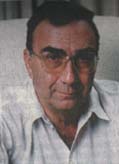
Dr. Shimon Ravid, joint managing director, Bank Hapoalim |
The
future is now
Even prior to the change of ownership, Bank Hapoalim was already
preparing for the future.
“We had major changes at the bank preparing for globalization. We
have built a strong organization from the teller in the smallest
branch up to the members of the board of management,” explained
Ravid.
With the new changes, smaller clients get answers faster via streamlined
computer systems, while larger clients have teams assigned to them
to provide them with the answers they need. At the same time, said
Ravid, even though the future of banking involves more and more
automated systems, Bank Hapoalim will work hard to maintain its
personal touch with clients of all sizes. |
The personal touch is important because Bank Hapoalim’s
main source of income still lays in the business they give to their customers
each and every day.
“It’s quite simple,” said Ravid. “We can not stay number one in Israel
if we don’t give our clients service where they need it.”
Talking up a storm
By the end of this year, the market penetration of cellular
phones in Israel is expected to reach between 45 and 50 percent, placing
the nation alongside Finland and Sweden as the only countries on Earth
with half the population using cellular phones. And before scoffing
and citing the Israel only has six million residents, consider this:
not only are about half the people talking on cell phones, but they’re
talking on them a lot.
The average Israel in on his or her cell phone between 400 to 450 minutes
per month, according to Jacob Perry, president and CEO of Cellcom Israel
Ltd., Israel’s largest cellular service provider. The average American’s
monthly usage is about 150 minutes.
“The ability to communicate instantly from anywhere is very important
to the Israelis,” said Perry.
Cellcom has been providing that ability since January 1995. They currently
hold a customer base of more than 1.2 million. But even at the very
beginning, the company was already proving it was ready to take the
market by storm.
“The day Cellcom launched its service was unbelievable. We opened three
stores and people actually camped out overnight so they could be first
in line. It was a madhouse,” he said. “ About 30,000 phones had to be
imported. They were flown in from all over the world to meet the demand.”
Within two and a half months, Cellcom had 80,000 customers and a new
chairman, Jacob Perry. Two weeks into his new job, with the success
of Cellcom seeming like a sure thing, disaster struck.
“We started to get complaints from customers that they could not places
calls on their phones. They said their handsets were dying. People were
very, very angry,” said Perry.
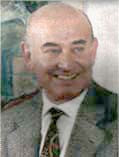
Jacob Perry, president and CEO, Cellcom Israel Ltd. |
Perry stopped all sales
and ceased charging for airtime while his staff scrambled to identify
the problem. It turned out to be a bug in the handset software.
The problem needed to be solved. The question was how to apologize
to all your customers as well as recall and reprogram 80,000 phones.
“Our answer was called the flash operation. The company we bought
the handsets from brought in 150 machines to do the programming.
We rented a number of huge basketball arenas throughout the country
and invited all our customers to come in with their phones to get
reprogrammed. We turned it into a party and offered them free refreshments
and prizes,” explained Perry. “In less than a month we had reprogrammed
all 80,000 phones. It was incredible. We turned a total failure
into a marketing success.” |
Four years later, the success is as real as ever. In March
of this year they sold another 40,000 phones. “We are perceived to be
a friendly and supportive company,” Perry said. “We take care of our customers.
We also contribute a lot of money to the arts, sports and education because
when your company is making a lot of money, you need to be giving some
of it back to the community. The public is aware of this, and it’s a win-win
situation to everyone.”
The
Business of Pleasure
"The future of tourism in Israel is bright and optimistic."
These words from Eli Gonen who was recently named general manager of
the newest and largest hotel chain in the country. The yet-to-be-officially-named
company came into being in April when Starwood Hotels & Resorts Worldwide
Inc. and Israeli conglomerate Koor Industries finalized its US$76 million
acquisition of the Radisson Moriah chain.
The new company will be part of Sheraton Israel, which
is jointly owned by Starwood and Koor. The five hotels in the Moriah
chain bring Sheraton's local property count to 12 hotels with a total
of 3,200 rooms. The Radisson Moriah chain has long enjoyed a strong
reputation throughout Israel, with business and pleasure hotels in key
cities including Tel Aviv, Jerusalem, Tiberias and Eilat. They also
operate a health and recreation spa at on the Dead Sea. "The most popular
resort for health and beauty is the Raddison Moriah Plaza Dead Sea.
"Being the largest chain will enable us to develop a
strategy of growth and expansion. We will be the dominant player in
the market," said Gonen. "Starwood will have a great influence on the
management. They are one of the biggest and I think the best management
companies in the hotel business. We have not yet settled on the final
name we are doing some research and surveys to find what will be the
best name to use. It will definitely be Sheraton, but may be combined
with Moriah as well." The Radisson Moriah chain has long enjoyed a strong
reputation throughout Israel, with business and pleasure hotels in key
cities including Tel Aviv, Jerusalem, Tiberias and Eilat. They also
operate a health and recreation spa at on the Dead Sea.
In recent years, about 55 percent of Radisson Moriah
guests have come from abroad and 45 percent are Israeli. International
clients come primarily from the United States, Europe and the Far East.
Of the Far Eastern market, Japanese businesspeople make up the majority
of the guests. "We have many return guests from Japan," said Mader.
"Whatever needs they may have we will offer it and accommodate them."
Flat out convenience
For those seeking a homier option on the Tel Aviv hotel
scene, the Hotel Alexander offers one- and two-bedroom apartments -
literally a minute from the beach - in the restaurant and shop-laden
northern section of the city. Along a coastline dotted with giant hotels,
the Alexander maintains a friendly, intimate atmosphere with rooms large
enough to be comfortable and an attentive staff. "We want to give the
impression of a family managed hotel - much like those in some parts
of Europe. Your not coming in and standing in three different lines
here waiting for someone to call you up when they are ready to check
you in," said owner and manager Benny Gatron. Gatron opened the hotel
in 1992, his idea was to build its level of service from the ground
up. He refused to hire anyone who had worked at another hotel so he
could start instilling his brand of quality service. "Almost the entire
staff has been with us from the beginning. That is a big part of what
makes us special," he said. "When you return to our hotel after a year
or two, you will see the same faces as before. This is very rare in
the hotel business." Guests are made up of a mix of business and pleasure
travelers from a range of nations - mostly the United States and Europe.
But most have one thing in common - they are repeat guests at the Alexander.
"People tend to either step in here by accident or because we were recommended,"
explained Gatron. "Most of our reservations are from people that have
been recommended. Once they're in - that's it, they never go anywhere
else."
An affordable kind of Grand
Across the road from the Alexander, stands the Grand
Beach hotel. The 212-room property prides itself of hospitality and
professionalism - offering both business- and leisure-minded guests
access to the treasures of Tel Aviv. Each room has centralized air conditioning,
a private bathroom and shower, a direct dial phone and a mini-bar. The
rooftop pool and lounge area offers a splendid view of the city. The
bar and restaurant provide guests with plenty of dine-in options including
traditional Jewish cuisine. The Grand Beach Hotel is located opposite
Independence Park and is just a short walk from Dizengoff Street and
many of Tel Aviv's finest attractions.
TOP

HOME About
Us Careers Contact
Us Reports Advertisers
About Japan Times
© 1999 World
Eye Reports
|