|
|
|
| . |
|
Value Added: Catapulting Malaysian business to the next level Malaysia's electrical and electronics (E&E) sector has long stood out as one of the country's leading industries in terms of output, exports, employment and investment. In 2002, E&E products alone comprised 68.1 percent of Malaysia's total exports of manufactured goods, an increase in value of 4.5 percent to $52 million from the previous year.
"This trend indicates the high level of interest and commitment of existing foreign investors in the country to further expand and diversify their investments in the sector to remain competitive amid the cyclical and highly competitive nature of the industry and the ongoing restructuring and consolidation of the industry undertaken worldwide," Dato' Seri Rafidah Aziz, Minister of International Trade and Industry, said earlier this year. The government has been clearly working to keep existing investors here through stimulus packages that encourage increased foreign capital in high-value E&E production such as high-end consumer electronics. Among these efforts is the relaxation of export conditions for manufacturing companies, whose aims include stronger domestic sales. Several Japanese E&E companies located in the country have benefited from these conditions and are reaping the fruits of their decision to invest in Malaysia. Fuji Photo Film (Malaysia) has both "I's" focused on success in the local market - Imaging and Information. The company has spent the past few years generating steady growth through its wide range of digital technology offerings in line with the corporation's "I&I" global strategy. "For 2003, we will continue to expand our operations through strategies based on the I&I concept, in particular focusing on the sales of cutting edge hardware such as digital cameras, digital mini-labs, digital medical imaging equipment, computer-to-plate equipment and recording media," explains managing director Hiroatsu Machida. "In line with directives from Fujifilm HQ, strong sales in hardware will lead to strong consumable sales through the solution package we have called 'Image Intelligence'." Image Intelligence is an integrated system of digital image-processing software technologies launched globally to enhance the entire line of Fuji Photo Film's products and services. Here in Malaysia, in a local consumer market Machida describes as extremely sophisticated, avant-garde technologies are required to maintain competitiveness.
"The Malaysian market, just like that of many other developed countries such as the US, Europe and Japan, is progressing in the field of digital technologies," he says. "This has led to the rapid development and popularization of computers and electronic information networks. Fujifilm believes that changes in customer needs and market conditions represent excellent opportunities for growth by consistently offering its customers total solutions using digital and networking technologies in the I&I fields." Fujifilm's Malaysian subsidiary itself has progressed over time in line with the country's consumer base. Up until January 1991, Fujifilm products were available in Malaysia via a network of distributors in partnership with Fujifilm Japan. As its focus grew sharper to become a leading innovator of "I&I" products, Fujifilm Malaysia took over the branded products from the former distributors and eventually developed the operation into the main distribution and marketing arm for the entire country. Today there are more than 600 outlets for Fujifilm products nationwide, over 50 of which are locally owned and managed. These outlets are high-concept sales and service points called "Fuji Image Plazas" and "Fujifilm Digital Imaging Stations". "Fuji Image Plaza (FIP) and Fujifilm Digital Imaging (FDI) Stations are both concept shops used as vehicles to promote our Fujifilm imaging range of products -- from digital cameras, film cameras, color negative films, instant films and instant cameras to color paper and photo batteries -- to build up a ubiquitous digital print network," explains Machida. "For example, now anybody can get digital prints anytime and anywhere -- which increases customers' imaging convenience tremendously." In addition to carrying the Fujifilm name and image, each of the FIPs and FDIs throughout the country receive support in the form of advertising, promotion and technical service from both the Malaysian HQ as well as the parent company in Japan. Of course, quality products and strong corporate support need to be backed up by top-notch customer service, and Fuji Photo Film is no exception. "Customer service is about satisfaction by customers using our quality products," continues Machida. "This has to be well-supported by our staff in terms of offering quality back up services, logistics and training when such needs arise from time to time." The company invests time and funds every year in training its network of managers on the ins and outs of providing first rate service, and its success has prompted the need for a change of address. In 2004, the company will relocate to a new corporate head office in the Menara Axis building in Petaling Jaya. A local HIT Shigeharu Annaka is a man who is putting his money where his mouth is - in Malaysia. When he took over as managing director of Hitachi Sales Malaysia (HSM) in June 2002, he immediately began a renovation of both his company's office and its attitude. "The first time I saw the company everything was very old - from the way of thinking to the office itself," he says. "After the Asian economic crisis this company became very conservative. It was always defense, defense, defense." With support from headquarters in Tokyo, Annaka spruced up the Petaling Jaya-based office, began a more aggressive local advertising campaign and set out to motivate his employees and Hitachi's national network of dealers and distributors. "With the opportunities the Asian Free Trade Area (AFTA) will create, it's a great time for us to change to an offense-oriented company," Annaka comments. "The most important things we have to do in terms of sales and marketing are to release new models and new products and to build the value of our brand. When people think of Hitachi they should think of strong, reliable, friendly high-technology products."
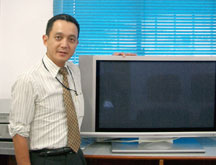
One example of Hitachi's latest approach to marketing is the "It's a HIT" philosophy. This new slogan is meant to reflect the lifestyle and level of quality the company offers. HSM has a long history of offering quality products in Malaysia. Established in 1972 as the marketing arm of Hitachi consumer products (which include audio and video equipment and home appliances), the local subsidiary evolved from a single sales office to a major operation with a nationally recognized brand and main service centers in Penang, Ipoh and Kuantan and service points across the country. In 1989, the company established local manufacturing operations via Hitachi Air-conditioner Products (Malaysia) and Hitachi Electronics Products (Malaysia) producing goods stamped with "Made in Malaysia" for local customers. Annaka plans to take things even further. When he arrived in 2002, Hitachi had a market share of about 10 percent air-conditioners, 2 percent of washing machines, and 2 percent of refrigerators. By 2004, his goal is to increase those figures to 15, 10, and 10 percent respectively. But the real potential as Annaka sees it is in the television segment. Hitachi Malaysia is no stranger to TVs. Its color TV division has done quite well and it still does a decent business selling LCD projectors and projection TVs. But with new shapes, styles and technologies being offered on the market, any company that wants to sell televisions has to keep up with the times. And this is where the plasma TV comes in. "Right now the market for the plasma TV is limited. Only high-income people can afford it," he explains. "But I've seen an interesting trend. Sales of projection TVs, which I first thought would be the best thing for the Malaysian market, are going down. Customers are now waiting for the price of the plasma TVs to drop so they can buy them." Annaka interprets this trend as a reflection of the desires of the new techno-savvy Malaysian consumer: "Malaysians want stylish, well-designed high-tech products just like our customers in Japan, Hong Kong and Singapore. They are very sophisticated consumers." It is a trend he hopes will allow his company to reach his 2004 goal of holding on to 30 percent of Malaysia's plasma TV market. Breaking the audio barrier Meanwhile, in the realm of automobile sound systems, Clarion has become a ubiquitous name inside Proton, Perodua, Kia, Nissan, Honda and Hino (Thailand) motor vehicles. With car audio as its main product, the OEM market accounts for 60 percent of Clarion Malaysia's income today. Its commanding 70 percent share of the market for car audio and stereo systems could well have induced Clarion Malaysia to sit on its laurels. Nevertheless, director Toshiyuki Nakazaki is committed to keeping the company far from complacent in its position as market leader. Although reasonably gratified at Clarion status as a household name in the country, Nakazaki explains that the maturation of the car audio market means that interest in new products cannot be raised much more. It was this realization that brought about the company's pivotal decision to go beyond manufacturing activities.
"Until around 1990, our facility was only involved in production. This was until we made up our minds and opened our eyes to the fact that if we continued solely in production we would not survive the future," Nakazaki relates. "This is when we started working on our own R&D and marketing activities." Although car audio systems remain its core product, Clarion Malaysia has begun developing its own wireless communication devices. Over 90 percent of the items it turns out today are developed at the company's high tech facility in Penang, which does everything from design to final production with the close support and guidance of Clarion Japan. Among its innovations are wireless communication technology products using Bluetooth technology created through joint ventures with UK-based companies. One of the pioneers in this field, Nakazaki is proud to point out: "Clarion Malaysia was among the first few companies to produce a Bluetooth carkit." He explains that although the OEM car audio market still serves as the company's "rice bowl", a strategic target of 30 percent of its future income will be sourced from car-audio related technology products born of smart partnerships such as these. "We have 35 engineers here, but our company is very small. We've learned to decide which products to develop, and which to give to other companies we have partnered with," he says. Through critical decision-making such as this, Clarion Malaysia has matured into a more self-sufficient entity over the years. The company is ensuring not only its survival in the market through good corporate and strategic engineering guidance from the company's headquarters in Japan, but also success in its own right as a creator of cutting-edge products. As Malaysia's E&E sector continues to count among the country's strongest industries, one of its flagship companies persists in striving for service excellence and a greater share of the Malaysian market. On its 16th year in Malaysia, Canon's efforts are paying off. It has cornered a whopping 60 percent of the market for cameras, 25 percent for printers, and 26 percent for copiers. In 2002, the Malaysian Superbrand Council designated Canon a "Superbrand," an honor shared by such admired and established local trademarks as Proton and Petronas. The Japanese company has clearly found stability in Malaysia, recently announcing a considerable increase in investment in order to step up lens production and digital camera assembly at its manufacturing facilities. Canon Marketing's president and CEO Satoshi Kimura is honored by the brand's success and extends his heartfelt appreciation to his Malaysian customers. In reference to their sizeable market share he says: "This is proof that the Malaysian people love Canon products as well as our level of service, in terms of speed and quality. For this reason we continue to strive to develop both."
Asked about the marketing arm's formula for success, Kimura replies: "Of course it's impossible to get this advantage in a day. There are many factors behind Canon's success, but the employees are definitely part of it. It is part of company policy to be more localized, and this is the main reason. We don't stick strictly to Japanese systems." Canon's local staff in Malaysia is made up of qualified individuals who take pride in the Canon name. "The staff themselves know and love Canon and strive to maximize opportunities for customers to evaluate our products," he explains. "It's not about market share. That is just a result of our efforts." Kimura notes that the relatively high demand for computer-related products in the country can be attributed to Prime Minister Mahathir's push for a more IT-oriented Malaysia. "The government has invested more money to improve infrastructure and encourage Malaysians to purchase more computers and accessories," he says. Canon now sells roughly 30,000 printers per month in Malaysia, and it is a number that rises steadily every year. Canon's digital camera sales continue to increase as well, with digital models now accounting for up to 60 percent of the company's total camera sales. Kimura discusses the role an uncertain global environment plays in bolstering demand: "People are looking for other tools to help them make use of the capabilities of their computers and also enable them to enjoy more communication." "I believe that Canon communication tools in a small way can contribute to the goal of better understanding between people," he adds. "If we can contribute in this manner, we will be very happy." A decade after its establishment, JVC Malaysia Sales and Service's operations in the country have come a long way from simple assembly to gaining an increasing role in the worldwide company's research and development activities. JVC had initially selected one of the country's premier industrial estates in Shah Alam, Selangor as a site for a final assembly factory. This was followed a few years later on April 1, 1997 by a new sales and service arm. As of this year, both of the company's audio and video factories in Shah Alam include R&D departments made up of about 100 people each, only 10 of whom are Japanese. The designation of advanced technical activities to local Malaysian employees is in line with JVC's ongoing efforts for further localization. With the help of technical exchanges from headquarters in Japan, the Shah Alam facilities have evolved into design centers for most of JVC's audio and video products, including the brand's more recent camcorder models. Wataru Ikebe, managing director of the Malaysian subsidiary, discusses the Japanese touch in the company's increasingly local operations: "For one thing, people know and trust Japanese quality control. From time to time I invite our dealers to come and visit our factories and see for themselves how much of a focus we place on this, and how much energy we expend to ensure a high level of quality." As a high-end brand in a market inundated with cheaper products, one of the challenges the sales and service arm faces today is educating the market that quality often comes at a higher price tag. "If we forgot about quality control, we could very easily cut our prices in half," Ikebe says. "But making such a great effort for quality obviously takes a lot of energy and money. This is something I try to make our dealers understand. We want our customers to be loyal, repeat buyers of all our products." Today, the concentrated efforts of JVC in Malaysia are aimed at remaining competitive without compromising quality and reliability. In Ikebe's words, "Customer satisfaction is of the utmost importance. At the end of the day, if the customers were not happy, JVC could not exist."
|
Nippon Paint www.nipponpaint. com.my Renesas www.renesas.com Fujifilm www.fujifilm.com.my Canon www.canon.com.my Melcom www.melcom. panasonic.com.my B Braun Asia Pacific www.bbraunap.com Mitsui & Co. www.mitsui.co.jp Clarion www.clarion.com.my Sunrise www.sunrisebhd.com APM www.apm-automotive.com Ranhill www.ranhill.com.my MASkargo www.maskargo.com  |

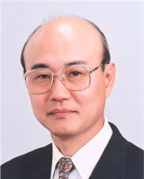 Hiroatsu Machida, managing director of Fuji Photo Film (Malaysia)