)

|
|
|
|
The Japan Times
WORLD EYE REPORTS
ONTARIO |
|
|
|
|
|
©THE JAPAN TIMES
|
Saturday, March 27, 2004
|
|
Back on the cutting edge of global competition
When SARS was first reported 12 months ago, Toronto, the capital of the Canadian province of Ontario, was one of the worst-affected cities, at least in terms of its public image. The World Health Organization issued a travel advisory against non-essential travel to Toronto in April of 2003, which had a devastating effect on business travel and tourism industries. A year later, the travel advisory is history and the region has bounced back strongly.
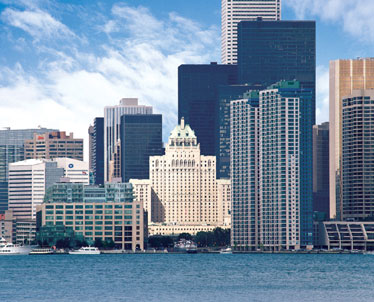 The skyline of Toronto's financial district betrays a pace of economic activity seen in the world's other financial centers. The skyline of Toronto's financial district betrays a pace of economic activity seen in the world's other financial centers. |
|
Ontario remains a vital business center in Canada and North America and is the main engine of economic growth and global competitiveness of the country. In fact, nearly half of its top 1,000 companies are in Ontario.
“Ontario’s economy is proving to be sound and resilient on a number of fronts to many challenges that have arisen. To accomplish our targets, we are becoming a more innovative economy. Innovation leads to new ideas, new products and services, which we can then export to the rest of the world,” says Joe Cordiano, Ontario’s minister of economic development and trade
|
The province has grown significantly over the last two decades due to its highly skilled labor force, strong and diverse industry clusters and increasing international trade.
The hub of Canada’s financial services as well as business and professional services, Ontario is North America’s second-largest center for the automotive, IT, and telecommunication industries and fourth-largest for the biomedical and biotechnology sectors. The province also has some of the best research and development (R&D) facilities and universities in North America.
|
The Toronto Stock Exchange (TSX), the world’s seventh largest, is also known as the global mining exchange, as it hosts more half of the world’s publicly listed mining companies.
But, it is not all business in Toronto. A beautiful city located on the northern shore of Lake Ontario, Fortune magazine says it is the world’s finest city in which to live and work.
Center of Japanese investment in Canada
One city located in the greater Toronto region has grown to become the focus of Japanese investment in Canada over the last 30 years. Mississauga is home to nearly 100 Japanese companies. It is also the location of Canada’s largest airport and has been named Canada’s safest city three years in a row.
|
|
 Joe Cordiano, Ontario's minister of economic development and trade Joe Cordiano, Ontario's minister of economic development and trade |
Pearson International Airport in Mississauga, approximately 20 minutes from downtown Toronto, hosts more than 50 global air carriers and has recently undergone a $4.4 billion expansion of its terminals. It is now positioned as a major international travel hubs in North America, further strengthening the region’s accessibility to global markets.
|
“I like to refer to Mississauga as the Japanese capital of Canada,” says Mayor Hazel McCallion, who has been in office for more than 25 years. “Mississauga is a dynamic city that provides for and services the needs of each community within the city. We have an 84 percent approval rate of the way we run our city, which we are told is the highest in Ontario. It is a beautiful city to live in.”
“The Japanese corporate community in Mississauga has always been very well respected both professionally and socially,” continues the mayor, sometimes referred to as “Mississauga’s unofficial ambassador to Japan. “Japanese companies and individuals contribute greatly to the community, and we welcome them with open arms.” Japan is Canada’s second largest trading partner behind the US.
|
|
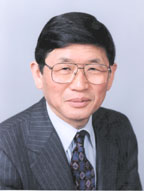 Kensaku Hogen, Japan's ambassador to Canada Kensaku Hogen, Japan's ambassador to Canada |
This year marks the 75th anniversary of diplomatic relations between Japan and Canada. During this time, Japan and Canada have enjoyed very good relations. In fact, there are more than 60 sister-city pairings between Japanese and Canadian cities.
“If you take an opinion poll among Japanese people, Canada is always among the top 10 countries that Japanese people would like to visit. They see Canada as clean, democratic, peace-loving, environmentally-conscious and pro-human rights, values that Japanese hold in high regard,” says Kensaku Hogen, Japan’s ambassador to Canada.
But more information on the country needs to be disseminated. “Canada has many natural wonders, technologies and companies that Japan or the rest of the world are not aware of,” the ambassador continues. “There is so much potential for this country. I tell the many Japanese businessmen who come here or whom I meet when I go back to Japan that Canada is a country with many unnoticed potentials worth discovering. I encourage my commercial people here in the embassy to coordinate with JETRO Toronto and help promote further relations between Japanese and Canadian businesses.”
|
|
 Hazel McCallion, mayor of Mississauga Hazel McCallion, mayor of Mississauga |
Those who get to know the country and its people eventually decide to move there. For instance, Toyota decided to manufacture Lexus cars in Canada, making it the first place outside Japan to manufacture the Lexus. This is considered a milestone in Ontario’s economic growth and testifies to the benefits of investing in this revitalized and resilient economy.

|

|

