

|
|
|
| . |
|
|
In the 15th century, one of Portugal's kings ruled that anyone cutting down a cork oak tree would be punished with decapitation. Of course this rule is no longer applicable in Portugal, but cork trees are still sacred. Today, Portugal has 50 percent of the world's cork resources and controls over 80 percent of the world's cork trade.
The company's products are made from the remains of cork from companies like Amorim and Alvara Coelho. Corkribas makes full use of the leftover cork: It is ground up and formed into blocks and sheets, wall and ceiling tiles, floor tiles, rubber cork material. Corksribas products are exported today to over 25 countries around the world. Of this, about 34 percent goes to Asia. In Japan, one of the world's toughest markets in terms of quality requirements, Corksribas has been present for more than 20 years. "Because of our quality and service our customers stay with us. We have had the same customers for over 20 years now," Ribas says. The company's hold on loyal clients is partly a result of Ribas' philosophy of good service offered to clients by "knowing them, by knowing their culture and the way they work". He explains: "We view travelling to visit our clients as an investment, not an expense." Ribas believes the way forward is to maintain Corksribas' high level of service. "Our sales forecast for next year is 12 million euros," he points out. "We will achieve this goal by visiting our clients, being honest with them and supporting them as much as we can. Our success depend on honesty, quality and service."
|
 |

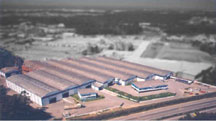 An aerial view of Corksribas' factory