

|
|
|
| . |
|
The north's leading light Sweden’s attractive economy continues to offer a wealth of opportunities to foreign investors. After its successful presidency of the European Union two years ago, the country on the continent’s northern edge set out to focus on domestic challenges in order to strengthen its economy. Highly exposed and relatively small, Sweden recognized the need to boost trade and increase foreign investment. And it has done so, with surprising results. Situated in the center of the Baltic Sea region, Sweden’s capital, Stockholm, has positioned itself as the European Union’s (EU) “Port to the East.” The region is considered one of the most dynamic in all of Europe today.
Persson says: “As a trade-dependent economy that exports almost 50 per cent of GDP, and with a strong position in the information technology (IT) and telecom sectors that have both suffered during the last few years, we realize how important global economic development is to us. The near future will be very much about bridging this slump in global demand in such a way that it won’t hit unemployment too hard and force otherwise viable businesses into bankruptcy. At the moment we’re succeeding above expectations.” High growth in value-added industries Indeed, Sweden’s growth last year was twice the EU average. Considering the bleak global environment at the time, this was a testament to the competitiveness of the Swedish economy.
And so when Swedes went to the polls on September 14 to vote in the euro referendum, hopes were high for an affirmative victory. Instead, the “No” vote won decisively. No new referendum on the issue is expected in the short term. Sweden’s outward looking strategy will have to do without the euro for now, and the general view is that the Swedish economy will continue to stand firm without the benefit of the common currency. Sweden and Japan: high-tech partners Looking towards Asia, last year’s Swedish exports to Japan amounted to more than $2.6 billion and Japan’s economic relationship with Sweden is regarded as crucial by both countries’ governments. “Trade and investment flows between our countries are substantial, and more and more Swedish companies are being established in Japan,” says Persson. “I see a continued expansion of Swedish investments.” “There is a growing interest in Japan for Swedish design, fashion, architecture and prefabricated wooden houses and construction materials. The Japanese are also keen to build on Swedish know-how and products for the care of the elderly. The high-tech capabilities of our two countries will be a driving force in future development.”
Sweden also enjoys economic prosperity, a relatively low crime rate, generous welfare and a high standard of living. These are all factors which make the country an enormously inviting destination. Public spending to promote education, skills and adaptability continues to be the largest of any country. It will stand Sweden in good stead in the future as businesses have access to some of the world’s most technologically savvy customers, as well as an extremely skilled workforce. Sweden’s future growth will depend to a large extent on its economy’s flexibility and adaptability. The country’s key strengths lie in the way the economy embraces change and in its intrinsic ability to position itself strongly within the global marketplace. This Nordic powerhouse looks set to remain a leading light in investment and trade through its ability to adjust to a constantly shifting global economy. |
 |

 Like Saab's much exported Gripen, the world's only operational fourth generation fighter plane, Sweden relies on external markets for growth
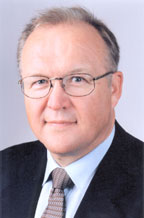 Göran Persson, prime minister of Sweden
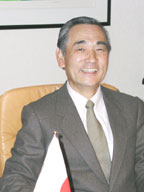 Tomio Uchida, Japan's ambassador to Sweden