|
|
|
 |
The Japan Times WORLD EYE REPORTS  |
 |
|
|
|
| ©THE JAPAN TIMES |
Friday, August 11, 2000 |
B1 |
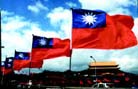
Taiwan, China and the world waited. Then, on March 18, the most controversial Chen was elected. And the expected tumult to follow went off more like a damp firecracker. It amounts to the story of Taiwan: business as usual. Taiwan and China have yet to resolve their row -- China has always viewed and Taiwan as a renegade province and Taiwan's businesses and government plug ahead within a de facto sovereignty, and China assumes a wait-and-see attitude. In the mid-1990s the Taiwanese government initiated the APROC (Asia-Pacific Regional Operations Center) plan, an attempt to position the island more conspicuously in its region despite years of diplomatic isolation. But Chen's new government feels the ambition should be on a grander, more global scale. Meanwhile, the chronically encumbered island nation keeps overcoming one speed bump after another in its quest for regional and global economic recognition, and the obstacles just keep multiplying. Taiwan is one of the most powerful trading nations on earth, with nearly unmatched amounts of foreign reserves. Its economic importance to the world is unquestionable; yet because of Mainland China's efforts, Taiwan is finding its lifeline to the round table of the world's affairs ostensibly obstructed. Not everyone seems to care outside of the country's inner circles. It is hard nowadays to get an idea of how close the average Taiwanese feel to their rivals: Taiwan's elderly are, in most instances, the only ones that might have been born in the mainland. The rest consider themselves more and more Taiwanese with each passing year. And while this might not bode well for cross-strait relations, it certainly means that many citizens are concentrating on life at home rather than who will control island in the coming decades.
For the first four months of 2000, foreign investors were more successful on the Taiwan's stock exchange than in any other Asian stock exchange. According to the Central Bank of China, average returns were 17.68 percent. Furhtermore, limitations on the percentage of foreign ownership of Taiwanese stocks are projected to end in 2001. The Political and Economic Risk Consultancy Ltd. (PERC) rated Taiwan among the three most responsive countries in Asia in terms of reacting to foreign investor concerns, along with Singapore and Hong Kong. Taiwan should know something about foreign investment, since the Taiwanese do so much of it themselves. Products from Taiwan claims the sixth-highest percentage of the U.S. consumer market, which is also an indication of the importance of Taiwan and its hi-tech expertise to the United States. Taiwan is the third-largest producer of computer-related products in the world. In Japan, Taiwan has 4.3 percent share of the consumer market. However, the new government's recent actions have had a jittering effect on foreign investors. New aims are to increase social welfare and to help resuscitate some of Taiwan's more traditional sectors, such as textiles, which in turn removes some funding from the IT companies that actually drive the economy. This seems contradictory to a policy announced only a few months ago, when the government pledged to increase expenditures in research and development for semiconductors and biotechnology. Nevertheless, expect the TSMCs and Acers to remain as important as ever.
Taiwan has a transparent monetary policy and a large amount of foreign reserves, two significant reasons the country resisted the effects of the recent Asian financial crisis. Another reason Taiwan has weathered the storm is the resourcefulness and independence of the private sector. Unlike the other Asian "dragons," the Taiwanese government and banks have not given considerable financial support to the local enterprises, and therefore the private sector depends largely on its own capital. There have, however, been tight government controls on capital due to the looming presence of Beijing. Taiwan expects further liberalization, like in its telecommunications sector, to help push it into the World Trade Organization, as the island is already the 14th-largest trader in the world. Beijing must be allowed in first, otherwise the People's Republic of China would feel snubbed by capitalistic favoritism and continue to shield its massive market from the world. Presently, only a handful of nations recognize Taipei as the legitimate government of China over Beijing, and most of them developing Latin American and African nations to whom Taiwan regularly doles out aid. The Taiwanese are 18th in the world in terms of personal wealth, according to the International Monetary Fund. And with an average annual income of $16,854, they are second in Asia only to Japan. If growth continues over the next decade, their international ranking could reach the top 10. The government predicts 6.1 percent growth for 2000. The conservative nature of the average Taiwanese businessperson led to fewer risky investments years ago, which meant less damage occured when shock waves from the Asian financial Crises went round the world. Taiwan sustained the highest growth levels in Asia during the absolute worst of times, a period that saw Hong Kong's Hang Seng index fall by record margins. Certainly, though, Taiwan did not emerge unscathed. Pan Asia Bank required a government rescue, for example, underscoring the need for review of Taiwanese banking fundamentals. Proud former president Lee Teng-hui greatly exacerbated cross-strait relations with his "state-to-state" proclamation one year ago, setting off just another round of regional and American edginess. But things are going so well, and people would just as soon ignore the global politics and focus on life in Taiwan. Chen's election merely confirmed what the world suspected and what Beijing refused to accept: The people of Taiwan can't be bullied by the mainland. Recently, Taiwan stressed a "need for international space and status." This may or may not happen, but then again, Taiwan's used to going at it alone.
Connections in the telecom work
Any booming economy is reliant on a strong infrastructure. For many years, Chunghwa Telecom was the company that single-handedly provided the telecommunications infrastructure and supported the heavy communication traffic that contributed to Taiwan's commercial prosperity. Today, the Chunghwa Telecom network is top-notch and Chunghwa Telecom boasts over 30 million telephone subscribers. The equipment is already digitized and broad-band networks are all set for operation. Chunghwa Telecom even has its own satellite and has invested in over 35 international fiber-optic systems. It's list of achievements is extensive and Chunghwa Telecom is well-positioned for the new open market. In 1996, the wireless industry was deregulated and many private-sector companies launched operations and joined the telecoms race. Acute competition was immediate and Chunghwa Telecom was obliged to reform itself to maintain market share. For the first time, Chunghwa Telecom tasted the challenges of competition as the mobile-communications market developed. All the major areas of the telecom industry have now been liberalized. The last one was of fixed-line voice transmission, which was opened to the participation of three local groups early this year. In the end, a competitive market is good for the consumer as quality improves and advantageous prices emerge. Consumers are given a choice and companies learn to be more responsive. As part of the government's efforts to further liberalize the economy, Chunghwa Telecom is being privatized. It's privatization is being carried out in two stages, under whiche a 33 percent stake will be sold off each time. "When the two stages are completed, 66 percent of the company will be privatized," said Steven Y. Chen, chairman of the board of Chunghwa Telecom. "Chunghwa Telecom is, at the moment, a state-owned company, so every step of the process must be approved and re-approved by the government agency. This is obligatory," explained Chen. "As a privately owned company, the highest authority will be the board and it won't be necessary to submit every detail of every project to our superiors. We are not privatizing for the sake of privatizing, but to enable our company to run more effectively and with more efficiency. The most important point is that we gain autonomy. A strategy has been devised to clarify Chunghwa Telecom's future business divisions. First Chunghwa will continue its focus on the traditional area of telecom services. A second group will concentrate on the development of telecom as a high-tech sector. This is an important area where Chunghwa is striving to continue in its position as trendsetter in Taiwan, providing guidelines that many developing high-tech companies follow. Chen explained, "When the government discusses trends in new technology, they look at Chunghwa Telecom to see what kinds of technology we are adopting." A third business group will be introduced to focus on other investments, whether they relate directly or indirectly to telecoms. This is in line with the wide scope of possibilities Chunghwa is leaving itself open to embrace. Possible areas of investment include the set up of a management consultancy, business-directory publisher, travel agency or hotel, to name a few. Chen commended the over 128 diverse investments Japan's NTT has made and proposes operating in a similar fashion. He said, "We have a vision: privatization through diversification and globalization." Going abroad and achieving the status of a regional center is an essential element in Chunghwa Telecom's post-privatization plan. Chunghwa holds a lot of capital, and it is seeking growth through investments overseas. Presently, Chunghwa was bases in Japan, the United States, Thailand and Hong Kong, and is fostering relations with many important international carriers worlwide. "Our foreign operations after privatization will be much more aggressive," said Chen. "Our expansion will be mostly in Southeast Asia, in countries that do not have very developed telecom markets yet, like Vietnam, Cambodia, Thailand, Indonesia and parts of the Philippines," Deregulation of the industry and privatization of the company has for Chunghwa Telecom instigated the passage from local leader to regional center. According to Chen, "We have to know where we were, how we are doing now and where we want to go in the future. We must take the source, method, experience and concept and put our strengths and weaknesses into perspective. It's important to see the entire process from the very beginning to the farthest future." The added-value that makes a difference In the eye of the end-users, certain telecom names stand out and steal the show.Chunghwa Telecom is undeniably one of the contenders who stood in the spotlight for many years and only recently has it invited other companies to share the center stage. Dazzled by the performance of those big-name companies, it is likely that individual consumers have missed the "behind-the-scene" companies that have kept the show going. International companies have been providing services all along. Like most forward-looking enterprises that know what is best for them, CHT has been involved in joint ventures with global technology companies. Siemens Telecommunication Systems Ltd. was founded in 1974 in Taiwan as a joint venture between CHT and the U.S.-based GTE Corp. The company provides services and technology for basic telecommunications infrastructure. In 1986, Germany's Siemens acquired a majority stake in the overseas operations of GTE, making STSL a Siemens company. "Our business was always in switching -- the central switch, the analog switch and subsequently the digital switch," said Dr. Larry T. Chiang, president of STSL. "It was a protected market, to a certain extent, where there were only three suppliers. Then, of course, the market totally opened up for international business." This is that pivotal point in the deregulation process that all the telecom companies experience in some way or other. Put in the simplest terms, CHT changed its culture to incorporate the challenging pace of competition. Taiwan Cellular Corporation, one of the new participants in the mobile service arena, stretched its muscles and charged full speed ahead. The experience of Siemens was somewhere between the two. Instead of reliable business servicing the monopoly, sales suddenly reduced dramatically and STSL was up against a decisive moment of reorientation and redirection. Fortunately, STSL caught on to the craze of the mobile frenzy. "Two of the present operators are using our infrastructure," said Chiang. "One of which is TCC, the largest one, to whom we supply all the infrastructure. We were the fortunate company to be chosen by them, not only because Siemens has the equipment, but also we have the local presence with over 350 engineers in a staff of about 650 people here. We probably provide the best support. The launch was fast and now there are about 5,000 base stations on the island for TCC alone. The coverage is good and we consistently continue to enhance it." Deregulation meant a shift in business focus. "At first, our business was about 90 percent from CHT and this year about 80 percent comes from the private sector," said Chiang. "So our move was from wire to wireless, from service to the one company monopoly to the private sector." STSL is in the ideal position to exploit the development of the fast-growing wireless market in Taiwan. An outstanding advantage is the access to the Siemens brainpower. The years of exceptional Siemens technology in the telecom field, plus some fine-tuning to adapt to Taiwan's requirements performed by STSL engineers, and you have the perfect recipe for a customer-focused systems integrator with knowhow. Carrying out testing and logistics services, STSL is geared towards adding value even in the manufacturing engineering side. Chiang sees this as the only way to survive and encourages his employees to keep on constant lookout for extra value that can be added. STSL is flexible enough to allow modification of its methods in the constant pursuit of bettering the company. Thanks to vital telecommuniations research and development expenditure and thousands of designated engineers, Siemens very likely has one of the most expansive R&D groups in the world. This is an essential factor that contributes to the high demand of their services. "In the last several years, we implemented a strong R&D center," said Chiang. "The impact for us was very important because suddenly we were more interesting to the customer. If a customer requests something specific, like a special feature, the tendency is to address a supplier with a strong R&D department. We are probably more capable of designing the product quickly and with better results than many other companies could." STSL excels at tailoring services according to customers' needs and though it only handles Taiwan business, it is a competent center that other regional branches look to for solutions. If they are unable to solve a problem, then STSL resorts to the German headquarters. STSL is primarily service oriented in Taiwan, but it has the potential of supplying the entire spectrum of telecom products. Even in the difficult market of free competition, STSL's performance has been exceptional, with an annual increase in sales of 40 percent for the past three years. "At this moment, when people pick up a phone, 30 to 40 percent of those sets have a Siemens switch on the other side," said Chiang. "This is not a consumer product; it is sold directly to the manufacturers. People may be familiar with our Chinese name but unaware that we are connected to Siemens. Again, we may be TCC's single supplier but people may not know we are behind them. We sell to them and they do all the publicity. We are catching up on the mobile-handset business and have about an 8 percent market share that is growing very fast. It's in this area we have more exposure to the end-user as Siemens." In Taiwan, the mobile market has grown markedly faster than anywhere else on the planet. It takes the average country seven years to achieve the penetration Taiwan has achieved in two years. At the end of 1997, 5.6 percent of the population used wireless phones. At the same time, Singapore, Hong Kong and Japan boasted rates of over 30 percent. Now, the penetration in Taiwan has multiplied nine times bringing the rate to a staggering 52 percent. The mobile frenzy was a result of the invasion of mass-marketing and promotional campaigns that came with the deregulation of the industry. Taiwan Cellular Corporation was one of those savvy players that received a license, granting participation in the newly liberalized mobile-phone market. The wild race began in 1998. Taiwan Cellular Corporation is a branch of Pacific Electric Wire & Cable, a company established in 1950, whose core business, as the name denotes, is the vital component of national infrastructure development, electric wire and cable. This is one of the traditional manufacturers that has reinvented itself to reap the profits from the surge of new technologies propagating in Taiwan. Taiwan's oldest wire and cable producer is consolidating its overseas plants in Thailand, Singapore, Honk Kong, Mainland China and Australia and spinning the core business off, under the new parent holdings company. At the moment, an accentuated focus of Pacific Electric Wire & Cable is on telecommunications -related operations. Telecom has been designated another core business, especially with the phenomenal business results it has had since its involvement in the local mobile-phone market. "Now we have over 4 million customers in the area of cellular phones, which makes us the No.1 player in the sector. Chunghwa Telecom has always been the largest in telecom business, but we have recently passed them as the largest mobile-phone provider. In the world history of the cellular-phone business, we are the only ones whose customers have increased so quickly," said Jack T. Sun, president of Pacific Electric Wire & Cable and chairman of Taiwan Cellular Corporation. "We started business in 1998, at a time when there was only Chunghwa Telecom who had 1.3 million subscribers and 800,000 interested customers on the waiting list for service and a mobile-phone number. We stepped in when there was demand. And we could supply." The race has only just begun. According to Sun, forecasts estimate that by the end of this year, the penetration rate will be up to 65 percent. And within three to five years, the rate is likely to pass 100 percent, taking into account that some people will have more than one number and also that the telephone user is not necessarily a human being but a machine. "We still have a very big market to develop," Sun said. Speaking of markets to develop, early this year, TCC received another license from the government, allowing participation of fixed-line operations in Taiwan. Three to five years are allotted for the establishment of the new infrastructure. In the meantime, TCC will start business by the end of this year. The fixed-line division will not be as explosive as the wire-less market proved to be, as it requires more capital up front and Chunghwa Telecom seems to have saturated the market quite thoroughly. Furthermore, fixed lines do not have the same high-tech appeal or diverse functionality that mobile phones do. Nonetheless, Sun remains confident that once the ingredient of competition is added to what has been a closed market for so long, expectations can be high. More importantly, as TCC is well on its way to becoming a comprehensive telecommunications provider, a foundation in a land-line system is necessary. TCC is striving to integrate all forms of data transmission into its operation, enabling the company to offer a complete range of services. To ensure all its bases are covered, TCC also invested in the global satellite phone system, Iridium, run by Motorola. Through this arrangement, the company will also benefits from strong relations with GTE and Siemens, both prime suppliers for the system. TCC is developing into an end-to-end telecommunications service provider, a "one-stop-shop" telecom company. Pacific Electric Wire & Cable and TCC are exemplary cases of a business that know how to keep up with the movements of today's markets. They respond quickly to industry trends, seize the opportunities when presented and continue to forge ahead into the future with growth as their motivator. Whether it's stretching their telecommunications lines overseas or entering promising new fields such as biotechnology, these companies will always consider new opportunities and strive to beat the others to the prize.
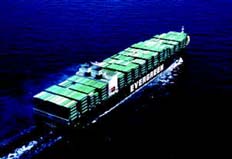
Each employee is likely to have never worked for another company. Evergreen tends to hire the best and the brightest, straight out of university. Thus begins a training period that, quite literally, never ends. The company advocates constant re-education and rotating positions. All this to create the perfect staff, Evergreen-style. And going into its 32nd year in the shipping business, perched comfortably among the most successful shipping outfits in the world, the company should know what it takes to stay at the top. Evergreen is truly one of the remarkable Taiwanese success stories. From one shipping line at its inception in 1968, Evergreen Group now controls 120 container ships with a tonnage capacity of over 360,000, making it one of the three largest operations around. Its expert staff and three-decade reputation for reliability are the pillars of its success. Evergreen Marine Corporation (EMC) president Marcel Chang wants to ensure that Evergreen's marine division is as efficient and profitable as possible. "Our ships and our service structure improve year by year. Therefore, our market share is increasing in accordance with our volume," stated Chang. "We have a strong presence in every major trade route in the world." Obviously, the company knows how to grow. Evergreen noticed a trend toward "containerization" for trade routes all over the globe, and established its first full container service in 1975. However, that same year saw the oil crisis pare down the marine transport market. Evergreen was relatively unfazed. The company had already established full container services from the Far East to the United States East Coast, representing routes that still make Evergreen's biggest business. Today, it is the No. 1 carrier in terms of market share from Japan to the United States, "Japan is one of the strongest economic powers in the world, and the strongest in Asia, so certainly that market is important for us." said Chang. The establishment of Evergreen coincided with a trend of rapid growth by the Taiwanese economy and the country's exports. Subsequently, the company's growth, if not a gauge, has surely been a mirror of the continuing development of Taiwan. Evergreen Marine has expanded in size and flexibility. It is one of the world leaders in refrigerated container, or reefer, service, a service it has offered since 1989. Five years earlier, the company also inaugurated a two-way "round-the-world" full container service. This was the first service of its kind in the world. However, Evergreen is facing some challenges as it moves into its fourth decade. The Asian financial crisis caused a container imbalance as the more affected nations rushed to export while their imports weakened. The situation is slowly improving as the region's most-affected economies recover. And while the company does not anticipate any threat domestically from rival shipping companies, trade volume from Taiwan is on the wane due to the rush of manufacturers shifting operations offshore to the budget-friendly mainland. Because of the rising cost of labor in Taiwan, Evergreen will be forced to compete more for overseas business. Currently Taiwanese shipping companies encounter direct-linkage difficulties in using mainland Chinese ports. Therefore shipping companies from both sides have strengthened cooperation for better service networks and quality. The company has two joint services with China's Cosco. One runs from Asia to South Africa and South America, and the other, established in April of this year, goes from Asia to Australia. Chang was optimistic regarding the business opportunities in the mainland. "China already represents the largest trading volume in Asia, in terms of their exports. Membership in the World Trade Organization will make the volume bigger, particularly when China has to further open their markets to the world," maintained Chang.
MAG takes its name beyond PCs MAG Technology chairman Rowell Yang pulled no punches when asked what individual and corporate consumers should know about his company. He said "I have just one message. We are back!" MAG's back, because for years customers knew of its highly reputable monitors. Although at one time it was also known for a not-so-reputable delivery history. MAG is now under solid management and is focusing on production of high-end CRT and LCD monitors with a heightened level of service. Yang is also chairman and CEO of monitor giant Proview. After an invitation to take over MAG, he realized that he could expand market shares by covering the full spectrum of monitor demands. Proview is an entry-level, consumer-oriented brand, that is particularly successful in retail outlets. MAG is preferred by businesses and corporations requiring higher performance. This year, MAG anticipates producing 2.3 million monitors. Proview will make approximately 5 million, placing it among the top six manufacturers by volume in the world. The companies have not yet merged. However, much of their research and development, supply chain, purchasing, logistics and after-sales services are already consolidated. Outlining why the award-winning MAG will remain only high-end, Yang explained, "The trend is for low-cost PCs, but there is a strong demand for products with better quality and technology. And of course, most important is to have better profit! So it's important for us to maintain this market. We will keep each company's target market separate so we don't hurt MAG's image. But I would like to have MAG help Proview's image." However, Yang isn't looking only to maintain MAG's current status by restricting the company to monitors. The plan is to move into various types of display products, such as Internet appliances. One example that will go into production in the third quarter of 2000 is the Internet personal assist device, known as IPAD. This allows the end-user to operate a portable monitor and logic board for more convenient access to the Internet. What it does not require is a cumbersome PC. "Until today, much of the business was in monitors, because all of the markets were focused on the PC," Yang explained. "But we started to increase other product lines. We believe that in the future, Internet appliances will be bigger than PCs."
|