|
World Eye Reports on Austria |
||
| ©THE JAPAN TIMES |
|
B3 |
|
Among the bigger euro zone economies, structural changes have been taking place through mergers and acquisitions. Major corporations are now looking to reinvent themselves as regional or global market leaders in their industries. But it is in the smaller and more niche-oriented economies of the euro zone, like Austria, where the greatest headway can be made in meeting the European challenge. The Kapsch group (www.kapsch.net) is a specialist in public and private communication networks and intelligent telematic systems for traffic. It has been spearheading the Austrian assault into the global technology niche market, but with an abundance of huge corporations, how much of an impact can niche players have in the global marketplace? Plenty. George Kapsch, a member of the executive board of Kapsch, explains: "If you look at innovations in technology, those who are driving it are the small to medium-size players like ourselves. What the larger players in our industry do is acquire our knowhow and apply it to their systems. Our strategy lies in working as partners to multinationals for certain regions and serving our niche areas using our own knowhow and product range in the global market." With the Kapsch group's partnerships with such global giants as Nortel of Canada, this strategy has proven successful. Not surprisingly, Kapsch has experienced its greatest success over the last three years. Europe's small to medium-size family-owned companies can no longer rely on their traditional home markets for success. The key to survival lies in adjusting and participating in the new corporate environment of the global marketplace. For Kapsch, this has meant focusing on three strategic segments: telecommunications, enterprise networking and traffic control. Particularly in the third segment, Kapsch sees an excellent opportunity for growth. He said, "During the last three years, we have been successful in all our strategic segments. Of course telecommunications will always be a growing business, but I also see a bright future for our traffic control segment. "We started around 10 years ago focusing on road toll systems. In the future we feel it will be necessary to have fair pricing of transportation, and therefore this market segment will prosper during the next decade. Currently, we have been developing our own system, software and hardware, and we have made two acquisitions. This puts us in position with the leading technology and a worldwide sales force. This is a segment where Kapsch will gain the position of a global player." With ongoing projects in China and negotiations being made to enter the Japanese market, this is indeed a bright prospect for Kapsch's move into the Pacific Rim. Finishing the fight For the euro zone's smaller niche-oriented economies, the challenge lies not in expansion and diversification. Global industry is undergoing a consolidation phase where giants are merging with other giants. We will soon see Europe's major industries dominated by just two or three major players. Smaller corporations must identify their niche and develop their position within the global market. The Kapsch example proves it. Collectively the euro zone has all the ingredients to become a global powerhouse. It's all a matter of choosing the right battles.
WER: Not very long ago you experienced important changes in the VAE ownership structure, with Voest-Alpine Schienen and Vossloh AG purchasing more than 90 percent of Vae stock. What has this done for Vae? Mülner: You should know that both Voest-Alpine Schienen and Vossloh have enjoyed close business relations with Vae Group companies for many years. We have worked together on international projects where we made package deals on rails and turnouts. In terms of development, we did a lot of common projects on the metallurgical side, because rail quality immediately affects our designs in the turnout business. This makes for a very convenient partnership. Their plants are close to ours, so this makes a lot of business sense. Vossloh is another big player in the market and is very well known for its fastening products. As manufacturers, we have always been inclined toward their products. Our current set-up allows us to have industrial shareholders instead of just institutional ones. These industrial shareholders are in the same field as we are. This is an advantage for us as a company. WER: Would you say this has resulted in an increase in business? Mülner: I wouldn't say there has been an increase because of this. It's more because we are better prepared for changes in the structure of our customer base, on the one hand, and the business itself on the other. If you look at what railway customers are doing and their standards, we are quite happy working directly with them. But it is in the big international projects where we may benefit in the future, because the customers quite often ask for packages of services. They want to deal with fewer suppliers for the whole project, so then it becomes easier to handle the package together with our shareholders.
WER: Has Vae started to look toward the Japanese market? Mülner: Japanese railway operators have been very keen about European railway technology. We are now looking to Japan with great interest and want to work in the development of technology for the high-speed segment of their market. We know that export activities from Europe to Japan would not make sense. So we have begun to look into possible partnerships with existing Japanese companies. WER: Do you see a significant potential for growth in the Japanese market? Mülner: I see great potential for Vae in Japan. The leadership position of Vae is due to two basic reasons: technology, on the one hand, and local manufacturing in our most important markets, on the other. By localizing, we are able to offer the proper technology that fits local requirements. So if we are able to join with a Japanese company that is experienced in this field, we can quickly adapt to the local Japanese advanced technology design. WER: How would you characterize the Japanese railway market? Mülner: An exciting and challenging opportunity for VAE. A taste for energy Everyone could use a bit more energy at one point or another. We have all felt a bit sluggish in our lives at times when we need to be at our best. This problem has met its match with Red Bull energy drink. During business trips to Asia, the founder and president of Red Bull Trading GesembH, Dkfm. Dietrich Mateschitz came across an energy drink popular throughout the continent. The value of the drink in Asia was evident and the trained eye of Mr. Mateshitz saw what the drink could be for the rest of the world, and so was born Red Bull energy drink. Mr. Mateshitz took the drink back to Austria and came up with his own formula with a few changes that resulted in its incredible popularity today. By increasing the volume, and adding carbonation, the drink became marketable as a soft drink like beverage, with some serious extra benefits. The exact formula is a secret, however the active ingredients are far superior to caffeine alone. Taurine is a naturally occurring conditional, essential amino acid in our bodies. It's effects are conducive to a heightened pace of both body and mind. Taurine also acts as a cleanser of the body, giving the consumer benefits outlasting the increase of energy. Red Bull also contains some caffeine, and is proving via its mass acceptance to be preferred among young people across the planet. Similar to a soft drink, but with the added benefit stimulating the body and the mind in a productive, high energy manner. Beyond coming to the public with an excellent product, Red Bull benefits from knowing its audience. As a drink that enables the consumer to feel at their best, without negative side effects, Red Bull has taken health conscious and motivated people by storm. Red Bull is especially popular among those involved in rigorous, challenging athletics. The majority of the marketing efforts taken by Mr. Mateshitz and Mr. Norbert Kreihamer, director of public affairs, are channeled through the sponsorship of extreme sporting events. Red Bull is a known and well appreciated drink at contests and events of surfers, free climbers, snowboarders, skiers, kite surfers, and any manner of extreme athlete. "We are inside the sport, not outside." These words from Mr. Mateshitz exemplify the deep acceptance, and appreciation the sporting community has for the introduction of a product that helps people doing dangerous things to be at their best. The intensity present in extreme sports is the attribute that Red Bull knew it could assist. Another arena where Red Bull is excelling is in clubs and bars worldwide. "The motivation to have a Red Bull at night is the same as during the day, to wake up, be at your best, and have fun." Mr. Mateshitz has no difficulty proving those words as Red Bull is becoming one of the more popular drinks at clubs, maybe even with a little vodka to make things more interesting.
HOME About Us Careers Contact Us Reports Advertisers About Japan Times © 2000 World Eye Reports |
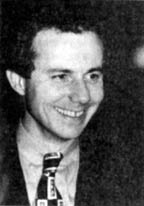 Kapsch AG adapts its products and services based on special customer requirements, says Georg Kapsch, member of the executive board of Kapsch AG
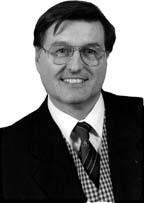 VAE Aktiengesellschaft makes solid progress in the global market thanks
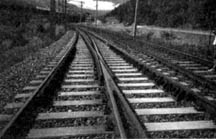 VAE Aktiengesellschaft's timeouts are turning out to