 |
WORLD EYE REPORTS ITALY'S NORTHWEST |
 |
 |
|
|
| ©THE JAPAN TIMES |
|
B1 |
|
|
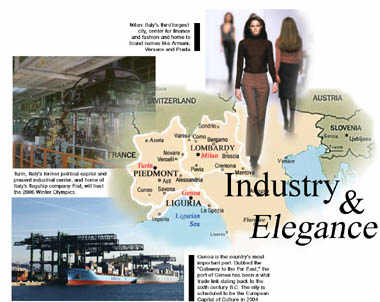
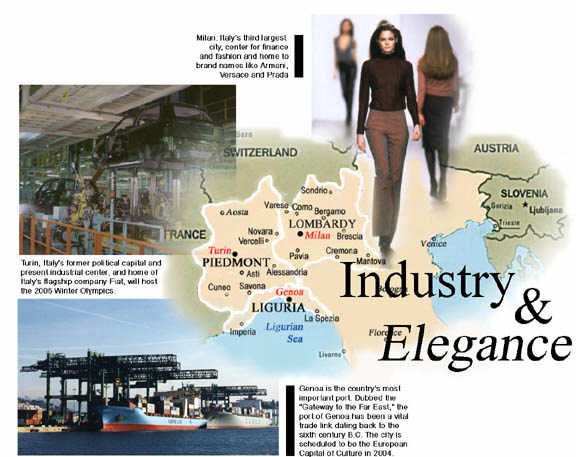
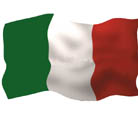
The historic triangle of trade: Milan -- Turin -- Genoa The year 2000 has represents more than just moving into the new millennium for northwest Italy. It marks the start of new era, where "new economy" sectors like telecom and information technology work hand-in-hand with traditional businesses such as mechanical engineering and banking. The so-called new economy currently generates 100 trillion lire of annual sales, equivalent to 5 percent of the country's gross domestic product. Internet technology and multimedia companies have created new jobs, and this is particularly prevalent in the Piedmont region. With the new international terminal at Malpensa and the redevelopment of the port of Genoa, Northern Italy is set to become a major southern hub. Even though northern Italy only industrialized in the 1950's, commerce and merchant capitalism flourished as far back as the Middle Ages. Cities such as Milan, Turin and Genoa led the way, trading in textiles and crafts. This entrepreneurial spirit made northern Italy the powerhouse of the Italian economy. Today, the region continues to play to its strengths, foremost of which is an exceptional concentration of successful family-run companies. Renowned for production of specialist goods, a reliable network of suppliers, and commitment to quality, these ane leading the nation toward economic integration with Europe. Despite certain shared values, the different regions of northwest Italy have preserved their cultural and diverse distinctiveness. They operate on several economic bases, and together they form the hub represented by the historic industrial triangle of northwest Italy: Milan, Turin and Genoa. Milan is associated with driving the economic engine of northern industrialisation, thanks partly to the presence of Italian multinationals such as Campari, Trussardi, Giorgio Armani, and Prada. The economic boom of the 1950's transformed Italy from an impoverished country into one of the wealthiest in the world. Milan's banking infrastructure and role as the fashion and design capital has brought prestige and people. The city also hosts Italy's stock exchange. "Lombardy is the number one region in Italy in terms of productivity, turning out some 200 billion euros worth of goods. Milan has the highest employment rate in Italy, as well as an average annual per capita income. Out of a total of 340,000 Milanese firms, 14,000 do business abroad," commented the Mayor of Milan, Gabriele Albertini. Milan has always been a magnet for hard-working entrepreneurs, such as the late Gianni Versarce, and it also draws commuters from the Lombardy hinterland. Lombardy is the richest and most populous region in Italy, producing a quarter of the gross national product and one third of all Italian exports. With an average income double that of the south, Milan and Lombardy have few rivals.
Piedmont is also an attractive area for foreign investors, demonstrated by well-established companies like Motorola, Danone, Michelin and YKK Corporation. Commenting on the internationalization of industry in the region, Valentino Castellani, the mayor of Turin, staed, "We are in a deep phase of transition, and we are welcoming companies with innovative technologies to position themselves in Turin. We have a significant concentration of academic, public and private knowledge, and alongside the development of a technological park, we are capable of fertilizing the soil for small entrepreneurial activities." The Piedmont region boasts high levels of productivity. It has a sophisticated telecommunications infrastructure and a workforce with strong engineering skills. In addition, the region has a solid tradition in quality foods and beverages. Piedmont produces vermouths, including the famous brands of Martini and Cinzano, owned by the Agnelli dynasty. The area is also synonymous with quality wine and an exciting urban environment. "Last year we started to see Japanese tourists," said Castellani. "And I remember when I first saw them, I said 'we've made it.' We are developing a lot of initiatives such as well-organized tours covering everything from the ski resorts and mountainous lake areas to the beautiful countryside areas of Monferrato and Langhe. The high standard of living is linked to the efficient and widespread services throughout the territory, and to a rich and dynamic assortment of cultural events and leisure activities." The high-speed rail network, which will soon connect Turin with Milan and Lyon, will further improve access to the region. This illustrates Turin and Piedmont's dynamic business climate, and establishes the region as a premier choice for prospective investors in northern Italy.
The redevelopment of its infrastructure is a major project for the city. This will improve access for businesses to the richest markets. "We are redeveloping the waterfront in the ancient port area, and we are positioning ourselves as an important center for conventions," said Perico. "In 2001, we will host the G8 meeting, and in 2004, we have been chosen to represent Europe as the capital of culture. In the first few years of this century, we hope to remove the highway from the city and build a tunnel under or over the port." Genoa and Liguria have long been a land of fisherman, sailors and merchant wayfarers. But along with the activities of people such as Renzo Piano, the celebrated architect who designed the Pompidou center in Paris, and Kansai airport in Osaka -- and the development of such renowned resorts as Portofino, the city is always looking for new opportunities to pursue. Genoa is investing to attract more tourists. "We have many important monuments and architectural buildings in our historic city which date back for centuries," stressed Perico. "We also have many museums, one of which is very interesting for your Japanese readers. It is the most important Italian museum, representing Japanese art. Our relationship with Japan is connected to a Genoese man called Eduardo Chiossone. He became the counsellor to the Japanese Emperor on economics in the 18th century, and while in Japane, he collected 20,000 works of art. On his return, he gave them to the city of Genoa, and they are now on display in the museum."
Diversity The historic Golden Triangle of trade, represented by the cities Milan, Turin and Genoa, is renowned as the linchpin to the Italian economy. It embraces a wealth of sectors including banking, textiles & clothing, food & beverage, import & export, telecom, I.T and furniture and automotive industries. The people of the region cling to the knowledge that the phrase "made in Italy" serves as an international hallmark of style and quality. Such a belief, coupled with the region's current performance, indicate that the world's fifth largest economy is destined to expand further. There were more than 300,000 active businesses in the area last year. About 92 percent of those companies have less than 10 employees, and 70 percent of the total operate in the tertiary industry. More than 74,000 are developed tertiary-industry companies such as monetary and financial companies, real estate businesses, information-technology-related businesses and research and developement companies. It is this superiority, excellence and distinction that characterizes Milan as a famous capital in the fashion and design. Milan is equipped with ideal conditions and proper infrastructures to be called a design town. Albertini: Many of the things I said represent important opportunities for foreign investors. Milan is already an international city. Over the last 10 years, foreign businesses partly owned by italians increased from 261 to 433 and Italian businesses with foreign shares jumped up to 531. A sign of this is the city's trend toward technological innovation, which is also a strong call for foreign investors. In Milan from 1994 to 1997, 2,204 patents were registered. Milan's patents represented 76.61 percent of the national total. Around a third of those patents belong to the electronics field. Significantly, there are 128 research institutes based here and 384 are companies that conduct research and developement activities. WER: How do you think recent changes of traffic through the Malpensa Airport are going to influence the general economic conditions of Milan? Albertini: The old Linate Airport could not handle the traffic of a metropolis that is the world's gate to Italy. So I think it was a good choice to decide to invest on Malpensa Airport. Four years ahead of what we expected, we have reached a traffic level of almost 17 millions of passengers per year. Malpensa represents an essential part of Milan's infrastructure for the city's developement. For business clientele, Linate Airport remains effective, and thanks to its proximity to the city, it is really appreciated by those in Europe who need quick connections to Milan.
|
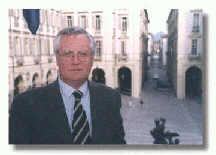 Valentino Castellani, mayor of Turin
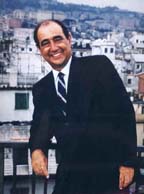 Giuseppe Perico, mayor of Genoa
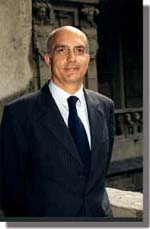 Gabriele Albertini, mayor of Milan