 |
The Japan Times WORLD EYE REPORTS  |
 |
| ©THE JAPAN TIMES |
Thursday, July 13, 2000 |
B1 |
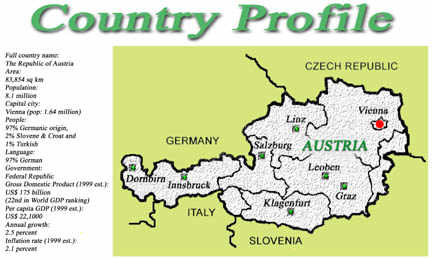
Constitutionally a neutral country, Austria needed to give serious consideration and careful concern to the question of EU membership, since it meant a loss of some sovereignty, both in economic and political terms. But the advantages of joining the union far outweigh the drawbacks, and every Austrian recognized that EU membership was a must if Austria were to survive impending globalization. So in 1995 Austria officially became a member. Being part of the EU provides a range of economic benefits in Austria, but it is the re-emergence of its formerly stable but stagnant economy that has made Austria what it is today. With a population of slightly less than 8 million people, Austria?s domestic market cannot absorb much of what is being produced. For this reason, almost half of the products manufactured locally are exported. From an employment perspective, a percentage increase or decrease in exports means the equivalent of around 10,000 jobs. What membership in the European Union has done to the Austrian export market is provide stability. Dr. Egon Winkler, director general of foreign trade and European integration in the Austrian Federal Economic Chamber, explained the direct impact on exports: "Since 1995, our growth in sales of goods to the EU has been higher than the average growth of our exports to other markets. This was the opposite before we joined the union." In less than six years, the Austrian economy has kick-started its exports to the EU to a level where the country has evolved into one of Europe?s fastest-growing trading partners, and this makes Austria a dedicated member of the European Union. The fall of communism in Eastern Europe is one of the most defining moments in modern history. Economically, it signaled the opening of new markets for the capitalist forces, not only for Europe, but for the rest of the world as well. Austria is situated near most of the major Eastern European markets and has played a key role in providing access to these emerging markets. Winkler pointed out, "As a member of the EU, we provide the best of both worlds for companies looking to do business in the new Eastern and Central Europe. On the one hand, we are part of the EU, and on the other, we are geographically close to these markets. Add our developed infrastructure to the mix, and we are an ideal location for businesses looking to set up production and distribution facilities for the new Eastern and Central European market."
These questions deserve serious consideration. Why locate in Austria to serve the new emerging markets when they themselves will eventually be part of the European Union and enjoy the same economic benefits as Austria? The answer involves timing. No date has been set for the inclusion of the fast-track countries into the EU. Individual countries may be admitted any time between 2003 and 2010. And if businesses wait for these nations to gain full membership before establishing themselves in these fast growing markets, valuable time will be lost. In today?s technology-driven world, losing even one year to competition means serious losses. The wait-and-see attitude that was once an acceptable strategy for many businesses is now a thing of the past. By locating in Austria, corporations are able to move swiftly and efficiently into the untapped markets. A second reason for investing in Austria today concerns infrastructure. After years of backwardness and dependence, the emerging markets of the East have many years to go before developing the sound infrastructure network that businesses need to operate effectively. By using Austria as a base, businesses have access to infrastructure that matches global standards. Austria also possesses the experience and knowledge necessary to do business with these emerging markets. Thus, locating in Austria is certainly an intelligent and cost-effective alternative for corporations looking to expand their markets. Overall, the Austrian economy remains stable and sound. Traditionally an export-driven nation, Austria is well aware of what investors need and what their goals are. Not only does the country provide market expertise and a developed infrastructure base; it also has the full range of benefits that come with its EU membership. For the seventh-richest nation in world, the time is now. It would be a shame to look elsewhere.
Many developing European countries are in dire need of reforms and financial assistance, and these countries have the greatest growth potential in Europe. The former Eastern Bloc states offer endless opportunity thanks to their market size and human resources. International corporations have not turned a blind eye to this potential. They are making the long-term investments necessary to succeed in these markets. In this respect, Austria is playing an integral role, particularly the region of Lower Austria. Lower Austria is the largest federal state in Austria and enjoys higher growth rates than the country as a whole. As an economic meeting point between the EU and the countries of Central and Eastern Europe, Lower Austria is a sensible location for corporations looking to gain a foothold in these markets. Whether it is a large multinational or smaller enterprise aiming to expand, Lower Austria is always on the investor?s short list of possible locations. The Austrian government has done an exemplary job in presenting opportunities for investment in Austria, and Lower Austria is no exception. Through its regional development agency, Eco Plus, investment in the Lower Austria region has seen an upswing that has made it one of the more attractive investment destinations in Central and Eastern Europe. Theodor Krendelsberger, president of Eco Plus, said, "We are at a very geographically desirable position because we border the reform states, most notably such emerging nations as the Czech Republic, Hungary and Slovakia. The new interest in these markets has activated our region." Many companies see Lower Austria as a logical location for serving not only the eastern markets but also the local market. To be convinced, one need only examine the region?s developed infrastructure. "The main transport routes in Austria lead through our province or the Vienna region, such as the railway systems, highway network, air routes and also the Rhine-Main-Danube waterway. This gives investors convenient and reliable accessibility," Krendelsberger explained. Indeed, the main reason investors have been hesitant to go straight into the emerging markets of Eastern Europe has been the lack of appropriate and reliable infrastructure. Companies would rather establish a base of operations elsewhere but close to markets showing
Burgenland is chock full of the most lucrative business possibilities available in Austria. WiBAG, led by managing directors Peter Schmitl and Josef Munzenrieder, is responsible for orchestrating regional development. Excellent market access with a history of close ties to the neighboring growth areas of Central and Eastern Europe, along with above average economic growth, low wage costs, favorable property prices and investment subsidies of up to 30 percent, are just a few reasons why Burgenland stands out in Austria. When one considers Austria?s renowned political stability, stable currency, extremely well qualified workforce, clean environment and high quality of life, it is clear that Schmitl and Munzenrieder?s task of developing this region has benefits that speak for themselves. Even with excellent physique, an athlete cannot succeed without the guidance of a disciplined coach. Likewise, Burgenland?s success is being guided by WiBAG?s strategic economic supervision. WiBAG specializes in the establishment of businesses, business location marketing, business promotion, subsidies and financing, technology development programs, as well as EU projects. Burgenland features technology and business parks that run the entire length of the province. In the northern part of Burgenland are the Parndorf and Kittsee business parks. Kittsee Business Park is optimal for industrial firms specializing in mechanical engineering, industrial equipment, electronics and consumer goods. One of the most interesting aspects of this business park is its location on the border between Austria and Slovakia. This strategic positioning allows for an ideal merger of benefits from the two countries. Slovakia is still working on establishing the same level of development, security, infrastructure and technology that Austria is famous for. This neighbor of Austria can benefit from the large number of jobs created by firms that choose Kittsee as their base. With its emphasis on telecommunications and energy technology, Parndorf is an ideal destination for technology-intensive production facilities, service industries and logistics management. Construction of a very large entertainment park is under way close by, further contributing to the well balanced working environment including both family activities and sporting possibilities. The main city of Burgenland, Eisenstadt, has its own array of specialties. Then there are six technology centers that run the length of Burgenland heading south. All these technology centers are in very close proximity to the Hungarian border, further contributing to Burgenland?s allure as a gateway to the Eastern developing markets. And each center has its own specialty: Metal working firms cluster in Middle Burgenland; building techniques and security in Pinkafeld; automobile knowhow in Grosspetersdorf; wood and fiber along with biological energy in Gussing; and companies specializing in logistics are grouped in Jennersdorf, in the far south of the province. The last stop in the string of business parks in the south of Burgenland is Heiligenkreuz-Szentgotthard. Similar to Kittsee on the Slovakian border, this business park is very large and the only cross-border business park between Austria and Hungary. It is the creation of an international production center for industrial and business enterprises, and it offers excellent infrastructure, easy access to the former communist countries as well as the benefits of the Austrian knowhow and stability, combined with a highly trained production force from Hungary at competitive labor costs. Beyond the tangible and obvious benefits of business settlement in Burgenland, Schmitl is quick to point out the cultural perks the province has to offer. Burgenland is home to some of the best Austrian vineyards. And as in all areas where good wine is made, delicious food is also abundant. In addition, WiBAG capitalizes on the safety, stability and high level of comfort that its province delivers.
|
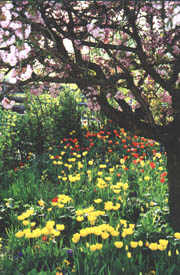 Spring in Innbruck
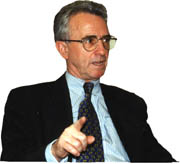 Dr. Egon Winkler, director general for foreign trade and European integration for the Austrian Federal Economic Chamber
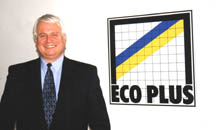 Opening doors for Japan, Theodor Krendelsberger is
 Managing Directors Peter Schmitl and Josef Munzenrieder lead WiBAG into new opportunities.