)

|
|
|
|
The Japan Times
WORLD EYE REPORTS
INDIA |
|
|
|
|
|
©THE JAPAN TIMES
|
Saturday, November 16, 2002
|
|
The greatest investment potential in Asia
India is the seventh largest and the second most populous country in the world. Today, it is a symbol of a struggle to ascend from poverty to prosperity and from tradition to modernity. India, recently emerged as a vibrant free-market democracy after the economic reforms in 1991, has begun to flex its muscles in the global information age.
A new spirit of economic freedom is now stirring India, bringing sweeping changes in its wake. The old centralized bureaucratic state has begun a subtle but definite decline, while introducing a series of economic reforms aimed at deregulating the country and stimulating foreign investment have moved into the spotlight.
While most people easily grasp the spirituality and poverty of India, the significance of this social and economic revolution often eludes them. As India moves firmly into the front ranks of the rapidly growing Asia Pacific region, its success on a global scale is becoming more evident.
|
|

The Japan Export Trade Organization (JETRO) fully mobilizes its information and expertise to respond to trade and investment inquiries at offices around the world. Advisers in India draw on years of experience to answer inquiries about diverse subjects, including Japanese import procedures, investment incentive programs of foreign governments and labor conditions. www.jetro.go.jp
The Federation of Indian Chambers of Commerce & Industry (FICCI) was established in 1927, on the advice of Mahatma Gandhi, to garner support for India's independence and promote the interests of the Indian business community. With a current membership of over 500 chambers of commerce, trade associations and industry bodies, it works closely with over 250,000 business units - small, medium and large - and represents around 20 million people. www.ficci.com
Zandu Pharmaceutical Works Ltd. has been manufacturing quality herbal healthcare remedies, vegetable plant extracts, nutraceuticals, cosmetics, and Ayurvedic generic remedies since 1910. Zandu, whose best-selling brands include Zandu Balm, Kesari Jivan, Pancharishta, Satavarex and Rhumasyl, also develops advanced intermediates for pharmaceuticals with the help of its world-class R&D faciltiies. Its mission has remained the same: "Ayurveda for the wellbeing of mankind." www.zanduayurveda.com
eBox
|
 Past and present blend into the heady mixture of economic potential that is modern India Past and present blend into the heady mixture of economic potential that is modern India |
|
"The future markets for India are considered extremely promising," says Dr. Manoj Vaish, deputy executive director of the Mumbai Stock Exchange (BSE). "The cost of labor in India is only one tenth of total costs. In addition, the cost and availability of capital goods and raw materials in India are attractive. Japanese firms are looking to India as a supply base for Japan and third countries." FULL STORY
|
|
Leading India's future in automobile technology
In 1945, the Tata Engineering and Locomotive Company (TELCO) was established for the manufacture of steam locomotives, in the belief that rail travel would continue to be one of the main forms of transport in India. Little did anyone realize that the TATA house would become one of the country's leading fully integrated automobile manufacturers.
"The real success of this company comes down to technical innovation," says Praveen Kadle, the company's executive director of finance and corporate affairs. "In 1954, when we entered into collaboration with Daimler Benz of Germany for the production of commercial cars, we decided we should concentrate on developing our own specifics. We recruited a lot of young engineers, including those from abroad who were of Indian origin. This helped us create a solid technology base, and allowed us to move into the components business. In fact, many of the component manufacturers in India have emerged thanks to TELCO's support."
|
|
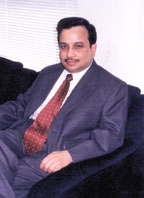 Praveen Kadle, executive director for finance and corporate affairs of Tata Engineering and Locomotive Company Praveen Kadle, executive director for finance and corporate affairs of Tata Engineering and Locomotive Company |
Tata's own distribution network and its ubiquitous brand name - one of the most recognized in India - have made flourish at the top of the market. "In this big country, Tata means trust," he comments. Taking care of this image is also a key part of TELCO's strategy. FULL STORY
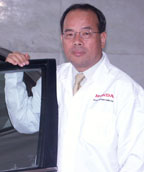 Hajime Yamada, president of Honda Siel Cars India Hajime Yamada, president of Honda Siel Cars India
|
|
Tailored cars plus extensive training spells success
Honda Siel Cars India (HSCI), a joint venture between Honda Motor Company of Japan and Siel of India, has predicted a sharp increase in sales in the next three years. As the Indian car market continues to boom, HSCI is confident that its firm commitment to the local market and increased presence will consolidate its position here.
From its inception, HSCI has enjoyed a reputation for providing an excellent product line, as well as for investing in its human resources. At HSCI headquarters in Greater Noida outside New Delhi, its president, Hajima Yamada, cites the company's key advantages:
|
"We have many advantages over other car manufacturers in this field," he says. "First, most of our products are produced in India, and designed to suit Indian conditions, which means we are always close to our customers. The Honda City model is a particularly good example of our strength in this market - its development was based on a close and detailed study of local conditions, and the needs and aspirations of the local customer. FULL STORY
Tata Engineering boosts market share
Tata Engineering has announced that it has increased its market share from 54 to 55 percent during the first half of the year.
According to figures released by the vehicle manufacturing giant, sales of passenger vehicles climbed to 46,609 units during the first six months, an increase of 19.5 percent from last year's figure of 39,019 units.
Annualized sales of the popular Indica model grew from 27,533 to 35,078 units during the first half of 2002. The Indica saw its market share edge up two percentage points to 23 percent in the compact car segment.
Meanwhile, first half-revenues for the car maker climbed 24.3 percent over last year's figures. Pre-tax profits for the first six months of 2002 went up 32 percent.
|
India
Area: 3,287,590 sq. km
Capital: New Delhi
Other mjor Cities: Mumbai, Kolkatta, Bangalore, Chennai
Population: 1.03 billion
Population growth rate: 1.55 %
Currency: Indian Rupee(INR)
Exchange rate: $1=48.48
GDP (PPP): $2.2 trillion
GDP real growth: 6 percent
GDP per capita: $2,200
Inflation: 5.4 percent
Industrial growth: 7.5 percent
|
|
Main Industries: textiles, chemicals, food processing, steel, transportation equipment, cement, mining, petroleum, machinery, software
Exports: $43.1 billion
Leading export markets: U.S., U.K., Germany, Japan, Hong Kong, United Arab Emirates
Imports: $60.8 billion
Top imports suppliers: U.S., Benelux, U.K., Saudi Arabia, Japan, Germany
|
|
 Sources: The CIA Factbook Sources: The CIA Factbook
|
|
|
|
|
|
|
|
|
|

|

|

