

|
|
|
| . |
|
Following Ford's acquisition of Volvo in 1999, the Swedish carmaker faced doubts about the feasibility of and the logic behind the tie-up. Two years later, the company has proved the naysayers wrong. Now approaching its 75th anniversary, Volvo continues in winning form thanks to a chief executive who has displayed mastery in product branding. Since his appointment in July 2000, Chief Executive Hans-Olov Olsson has had a rather auspicious beginning as Volvo's top man. For two years running, annual sales have climbed to record levels from 411,000 units in 1999 to 422,000 last year. While Volvo's success can be partly attributed to a bullish automotive sector, much of the credit also belongs to Olsson, who did a lot to redefine Volvo's reputation. Although the importance of brand awareness has always been in the Volvo psyche, the company relied on its long-standing reputation as a manufacturer of dependable, safe family cars. In the year since Olsson took over, Volvo has cemented its status in the high-end segment and at the same time garnered mass-market appeal. With a sleek new look, Volvos stand well on a claim that they are a combination of safety, speed and elegance. "Corporations spend countless marketing dollars communicating their messages. But the ultimate goal for a brand is to establish a dialogue with the consumer," explains Olsson. Here in Volvo, we have been very successful in engaging our customers in dialogue. "By doing this, we are able to relay our own message, listen to what the customer wants, and most importantly respond to them. The models that we have out today are a result of this consumer dialogue," he continues. Six glorious years in Japan Olsson's rise to the top comes as a refreshing break in today's high stakes game of executive poaching. He is a true Volvo man. Starting his career in Volvo in 1966, Olsson worked in areas including logistics, IT, supply administration, production and marketing. It was in 1990 when Olsson embarked on what he fondly calls "the most exciting six years of my career" as head of Volvo Cars Japan. Today, the Volvo brand still holds on to its lofty position in the Japanese market, a commendable feat considering the dominance of local brands such as Toyota and Nissan. Much of the success can be attributed to the carmaker's long history in the country. "I think we have gone through all the phases that one goes through when establishing a presence in Japan. We first started with a trading house, then we did a joint venture. The final step came in 1986 when we established our own subsidiary," he recalls. "My predecessor did an excellent job in establishing the subsidiary, then I came in and worked on creating the image of respectability that Volvo now has in the Japanese market," he continues. Olsson arrived in the country in 1991 just as Japan's economic bubble was about to burst. Following years of strong performance, sales had dipped. It was during this recession that Volvo witnessed Olsson's branding and marketing expertise at work.
"In the first place, there is no reason for a Japanese person to buy a Volvo car. They don't need foreign cars. So, in our case, the real breakthrough came when we managed to read some of the trends, among which at that time was the growing awareness among Japanese consumers of the importance of quality of life. Volvo, in a way, embodied that," he says. "We are looked upon in the rest of the world as a car for the modern family. In Japan, the young family wanted a safe, comfortable car and we managed to communicate that to them. It was a dialogue between the brand and the customer, he adds. Building on that distinct client focus, Volvo has rebounded admirably and expanded its reach to other client segments. "We have a very solid foundation in Japan. Today, our product portfolio is even better then ten years ago. We have a wider scope of products that range from the family market, to lovers of sporty sedans, all the way to luxury car buyers. We are stronger and there is a real demand for our products." Although confident about its current position, Volvo will continue to rely on Olsson to weave his branding magic once more, though this time on a much grander scale with the impending slowdown in the global economy and imminent over-capacity worldwide. While other major automotive brands tray fashioning an identity to be all cars to all people, Olsson has no ambitions of making Volvo a volume brand. His strategy is clear - to strengthen Volvo's reputation for luxury and safety.
|
Honda www.honda.se Yamaha www.yamaha-motor.se Scania www.scania.com IFS www.ifsworld.com  |

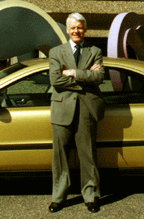 Hans-Olov Olsson's stint in Japan has proven vital to Volvo's growth worldwide
 Volvo's sleek new models, a far cry from the familiar boxy look of earlier years, are expanding its customer base.